Cera Care:
Fall Risk
The feature enabled a shift from reactive care to proactive intervention, improving outcomes for both service users and care providers.
Problem Definition
Falls are one of the leading causes of hospital admissions and loss of independence in older adults.
Within Cera, falls prevention was largely reactive, with carers responding to incidents after they occurred rather than identifying risks early. This made it difficult to reduce falls or support long-term independence for service users consistently.
The challenge was to better support carers in proactively identifying and managing fall risk, using data already available across care plans, daily notes, and medication records.
The goal was to shift from reactive care to proactive healthcare, equipping carers with the right information at the right time to reduce the risk of falls.
Process
I worked through an end-to-end product design process, starting with discovery to better understand how falls are currently identified and managed.
Conducted user interviews and workshops with carers and care coordinators to understand existing workflows, pain points and how falls were being handled in practice
Explored the data available across the platform (care plans, daily notes, medication records) to identify opportunities to better support decision-making
Collaborated closely with data science and product teams to understand what insights could be derived from this data
Through this process, an opportunity emerged to use predictive modelling to identify individuals at higher risk of falling before incidents occurred.
I then mapped user journeys and intervention points, focusing on how and when carers could take preventative action, and explored ways to communicate risk, confidence and urgency in a clear, accessible way.
Solution
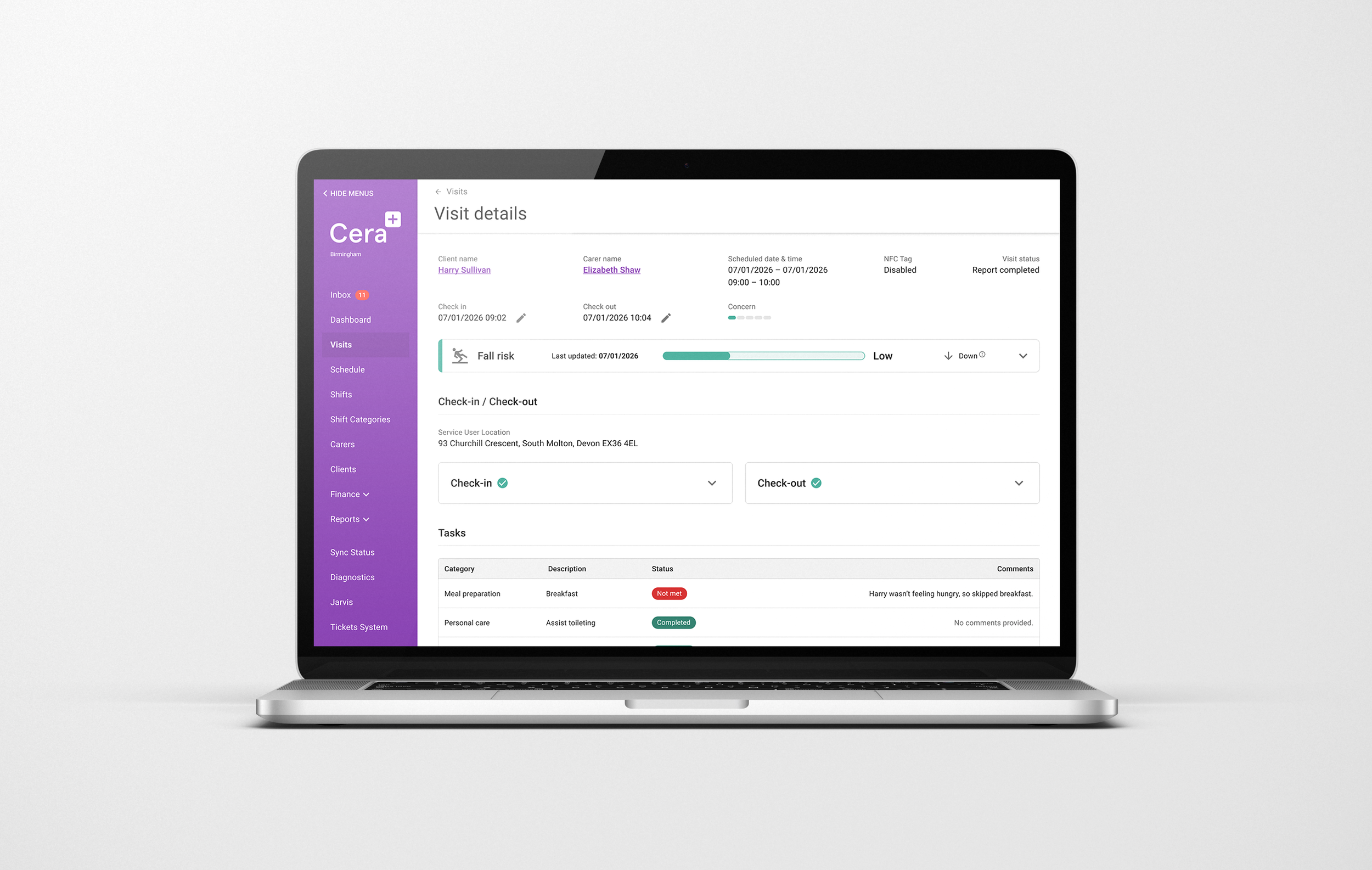
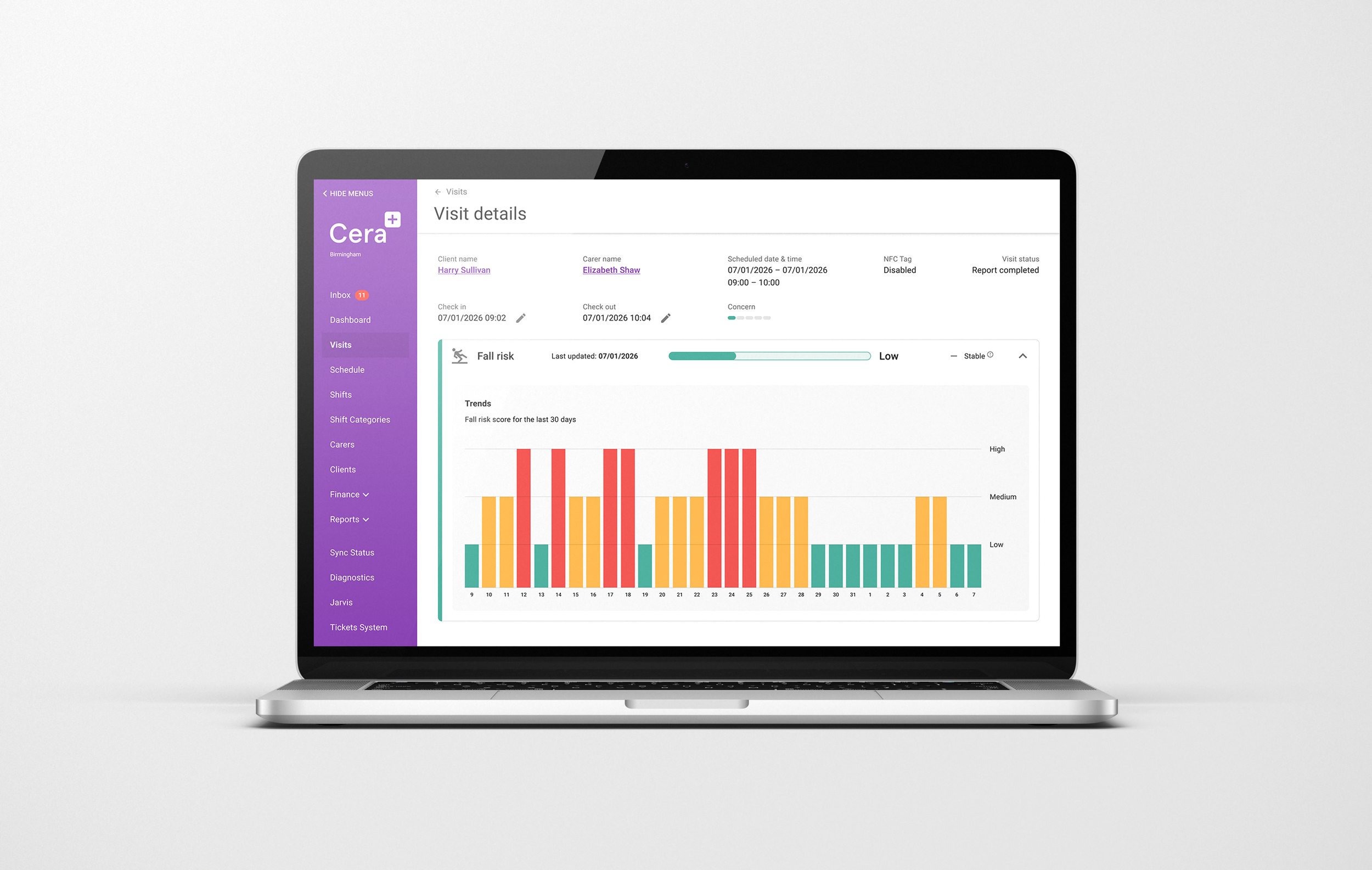
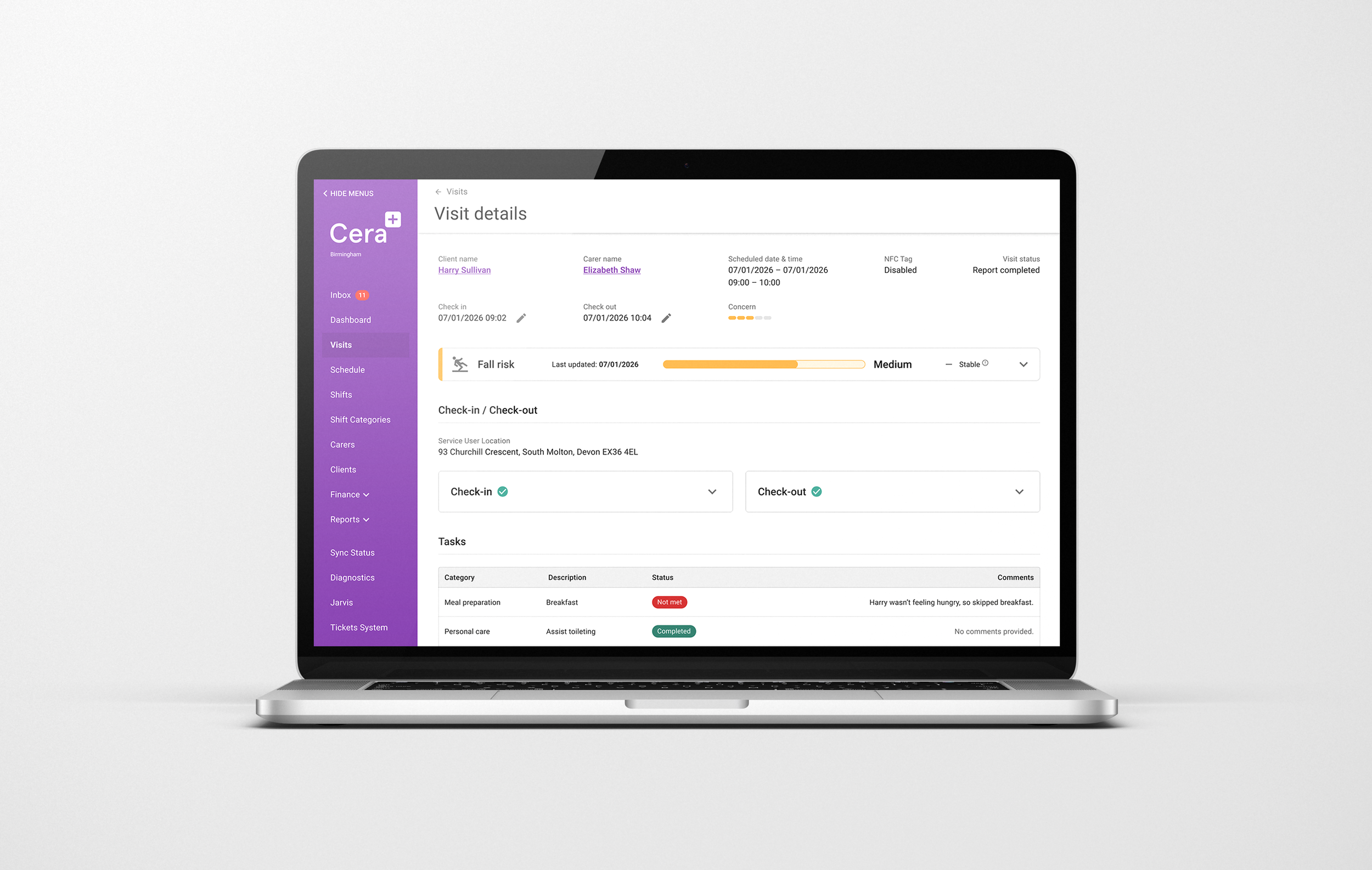
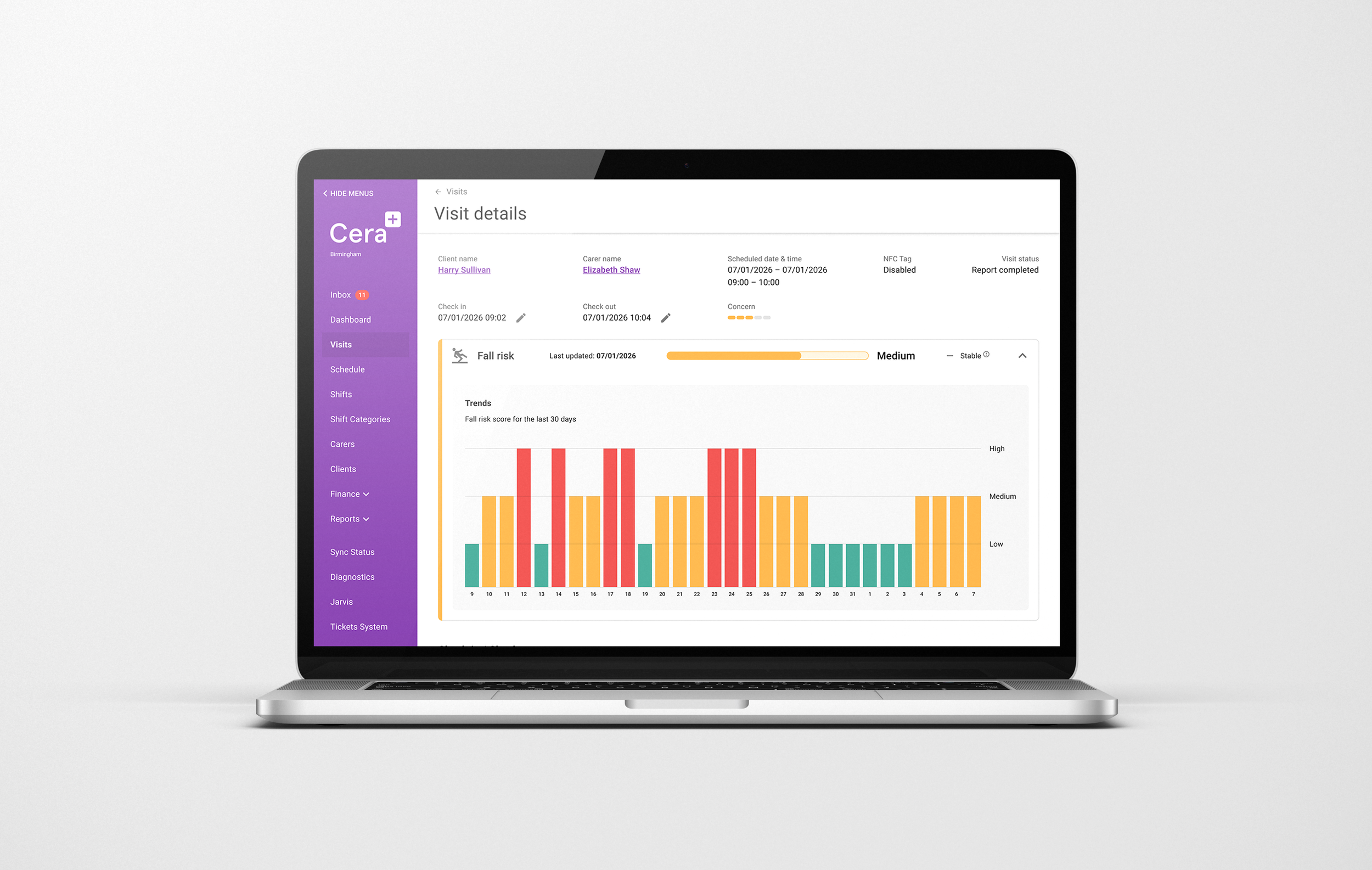
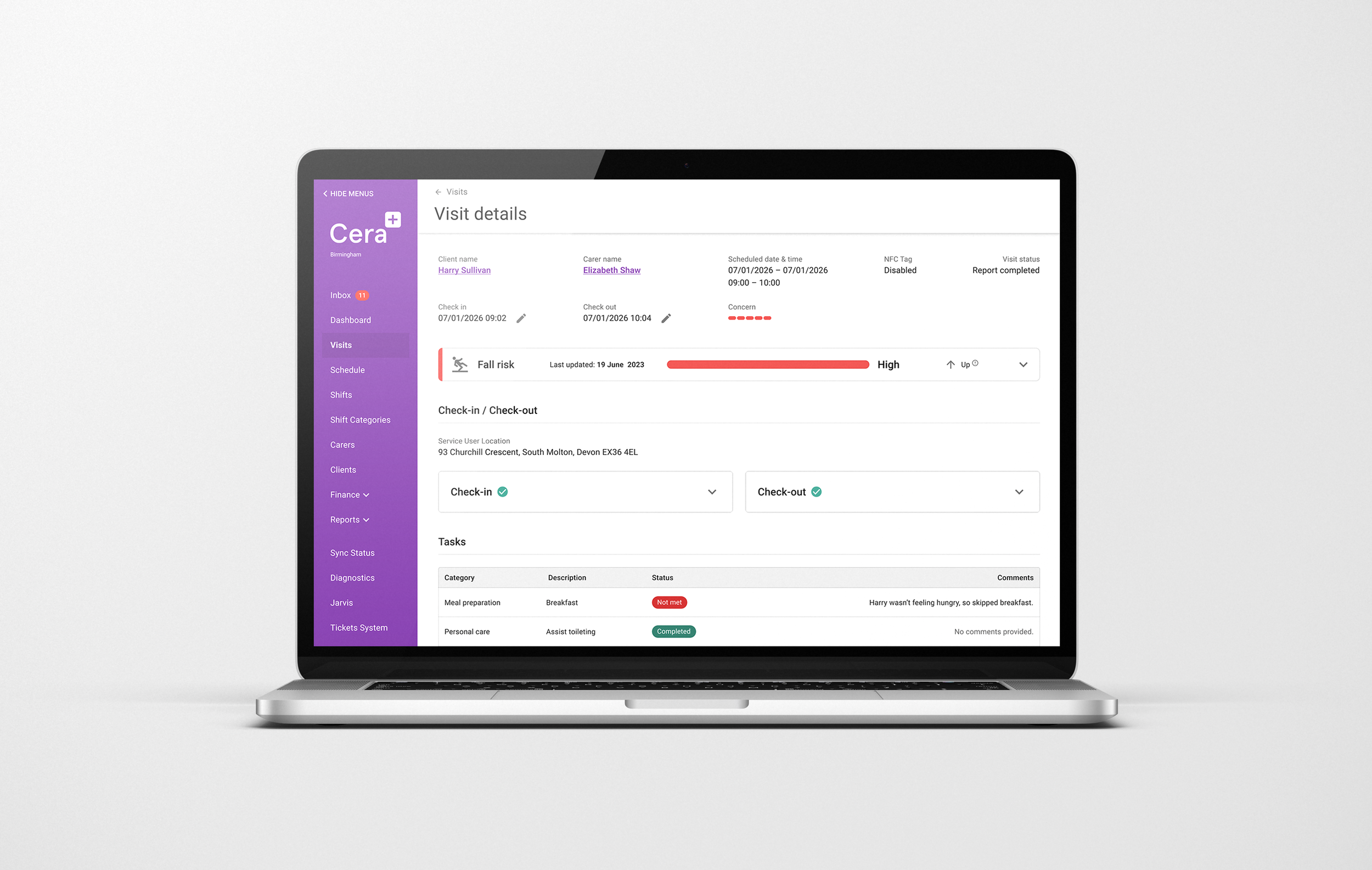
I designed a fall risk feature that translates predictive insights into clear, actionable support for carers.
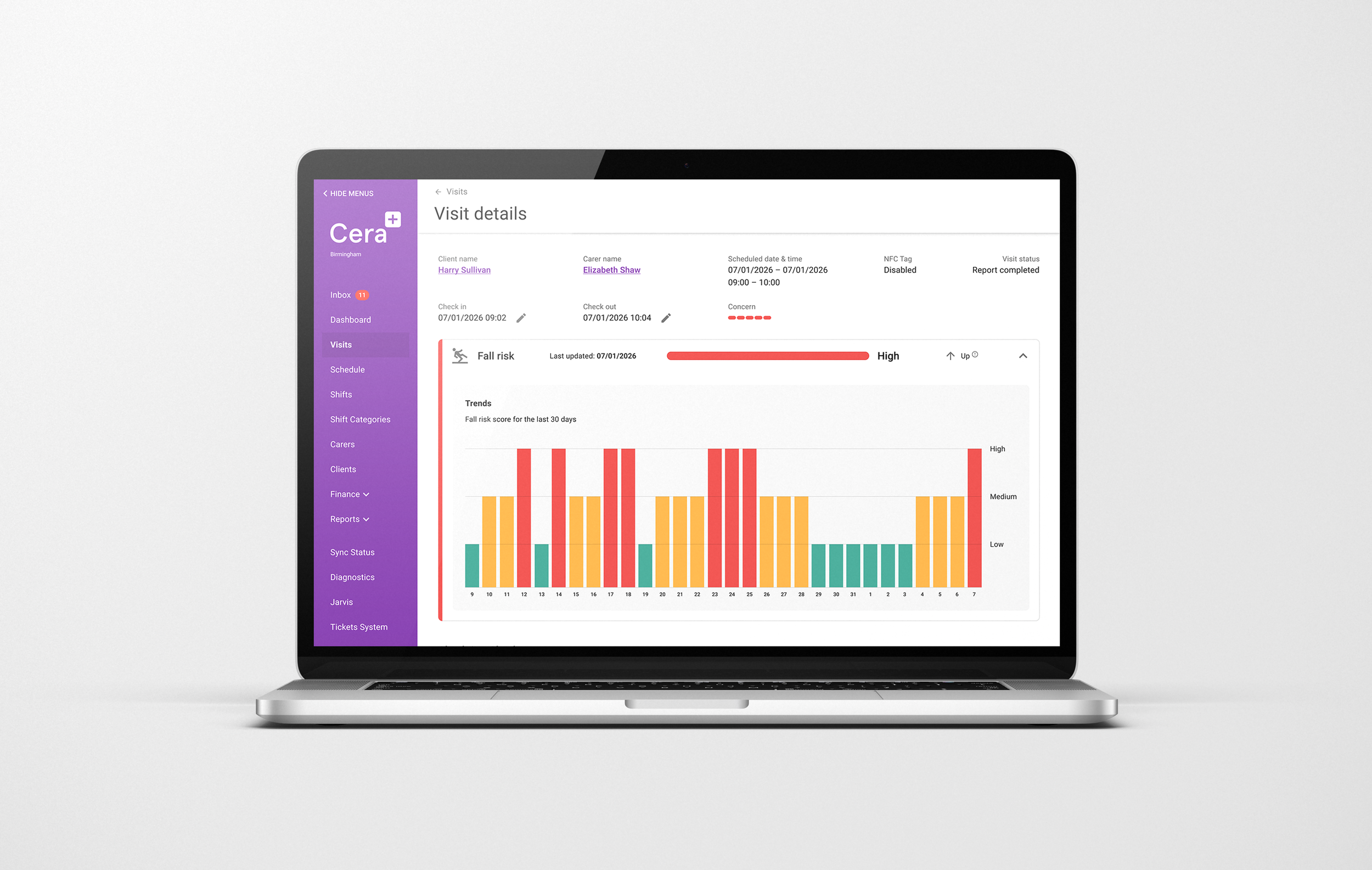
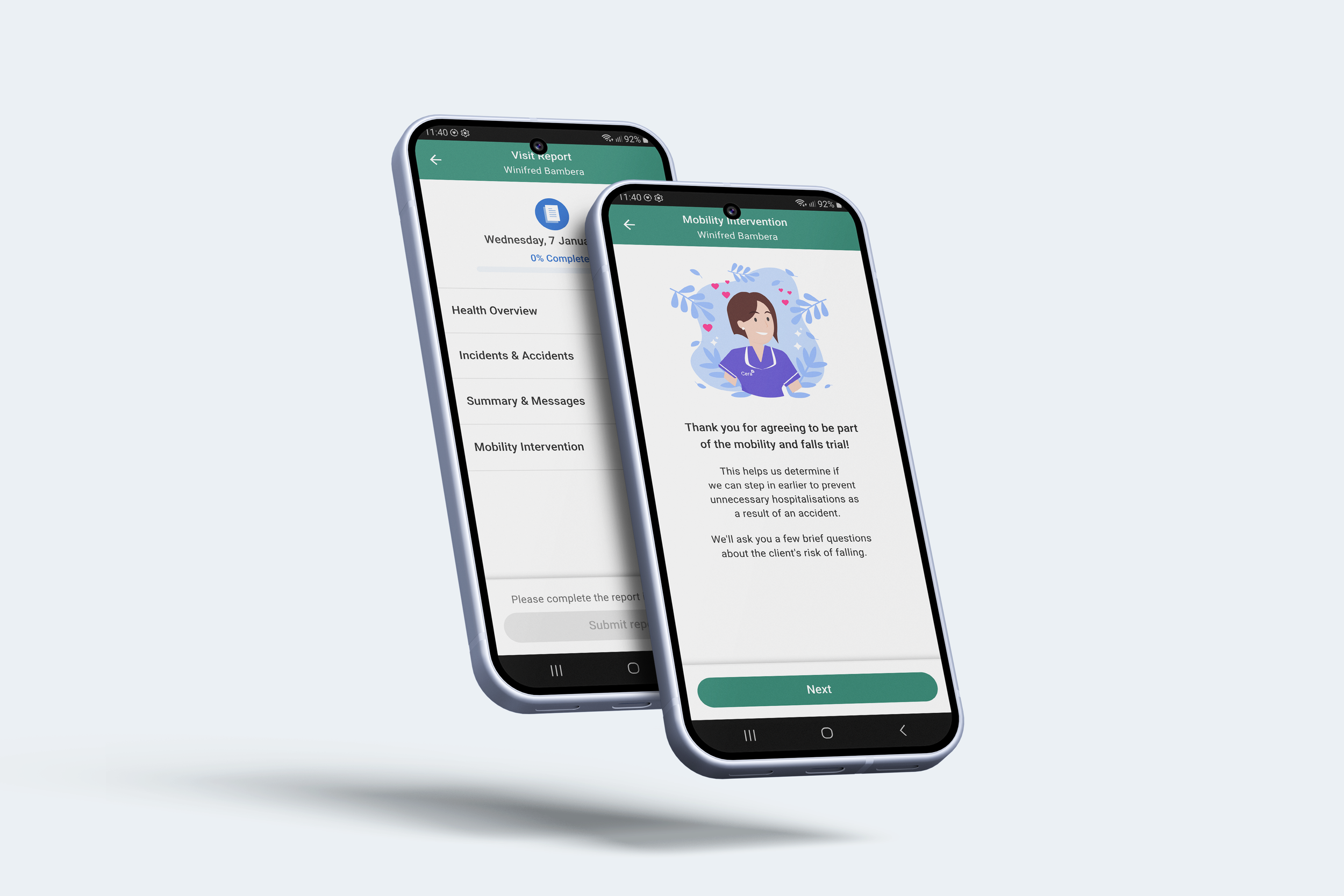
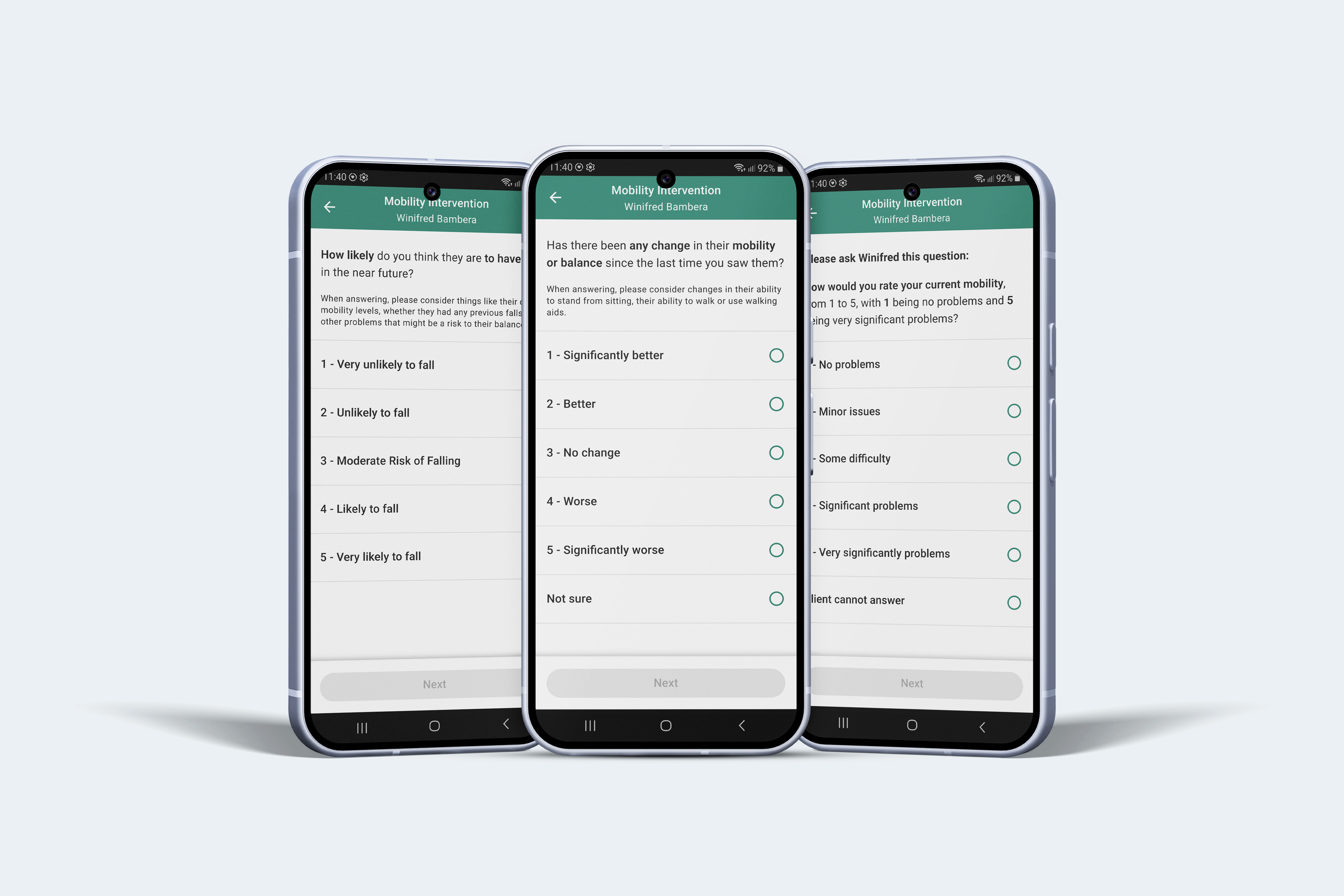
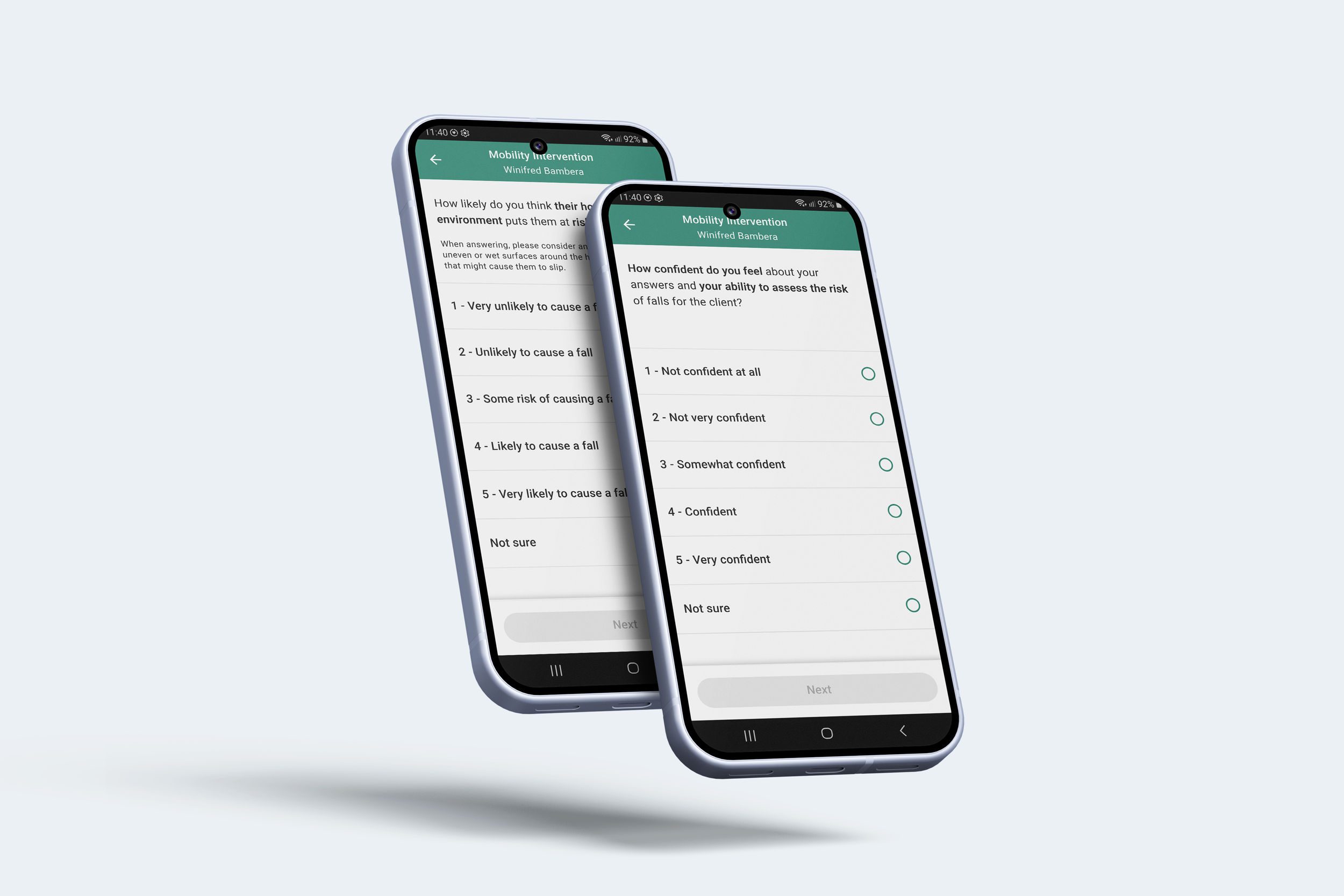
Surfaced fall risk alerts within the carer app, highlighting individuals at increased risk up to 7 days in advance
Communicated risk using simple, easy to understand indicators, designed to build trust and support quick decision-making
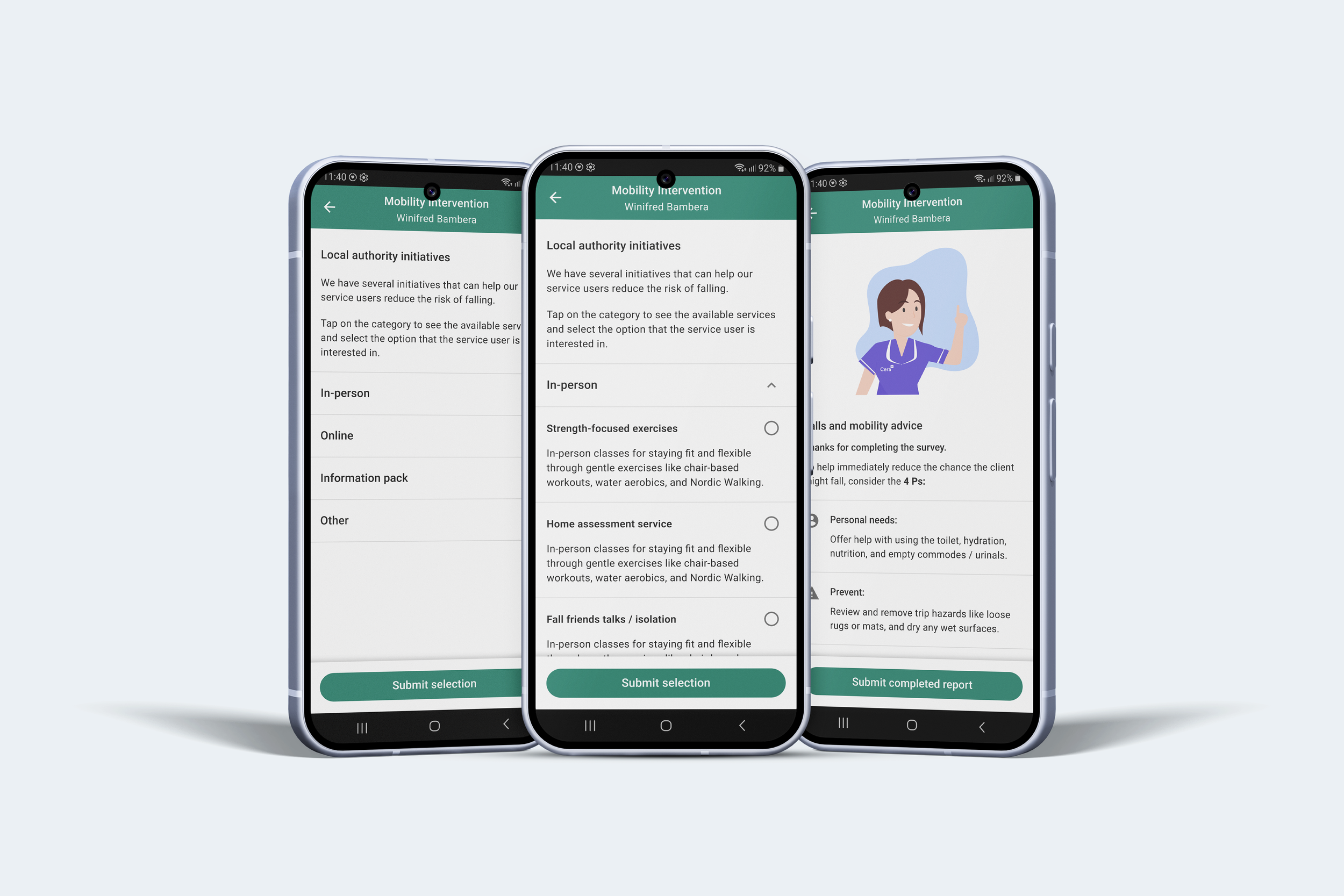
Provided actionable guidance to help carers take preventative steps (e.g. environmental checks, hydration, medication awareness)
Integrated the feature into the Digital Care Platform (DCP), enabling care coordinators to monitor risk and plan interventions
The focus was on making complex data practical and usable in real-world care settings, supporting carers to move from reactive responses to proactive prevention.
Impact
Falls risk predicted up to 7 days in advance, with 80%+ accuracy (up to 97% in some cases)
Contributed to a 20% reduction in falls
Helped reduce hospital admissions by up to 70% for high-risk individuals
Supported delivery of over 2 million care visits per month across NHS Integrated Care Systems
Estimated £1 million per day in healthcare savings through reduced emergency admissions