Cera Care: Improving visit verification through Geolocation.
Cera's carers used NFC tags inside clients' homes to verify that visits had taken place. In practice, the system created significant operational challenges. Lost or damaged tags, failed scans and inaccurate records generated around 300,000 support tickets every month, placing considerable pressure on branch teams while reducing confidence in visit verification.
Working across Cera's Android Carer App and Digital Care Platform, I led the end-to-end design of a new geolocation-based solution. Collaborating closely with Product Managers, engineers, Data and Operations teams, I redesigned the visit verification experience to create a simpler workflow for carers while providing branch staff and local authorities with a more reliable audit trail.
The existing NFC process had become unreliable.
Carers frequently encountered damaged or missing tags, failed scans or incorrect visit records, often leaving branch teams to manually investigate and resolve support tickets.
At the same time, local authorities required stronger evidence that care visits had taken place, making accurate verification increasingly important.
As a result:
Around 300,000 support tickets were created every month.
Branch teams spent significant time resolving failed visit records.
Carers experienced unnecessary friction during every visit.
Audit evidence for local authorities was inconsistent.
Existing workflows relied on ageing hardware that was increasingly difficult to maintain.
The Problem
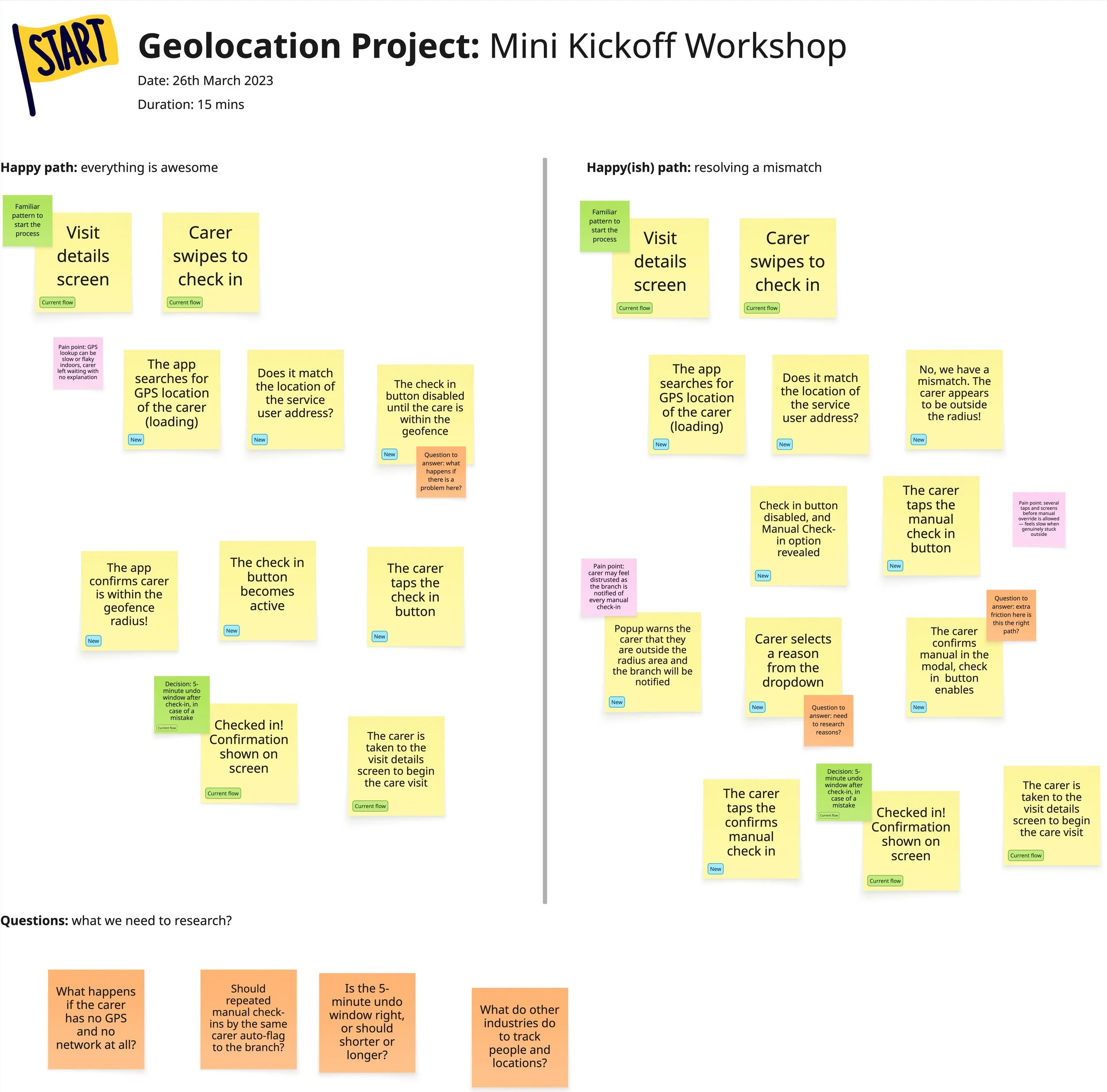
Discovery began with understanding the complete visit verification journey rather than simply replacing the technology.
Working alongside Product Managers, branch teams and engineers, I mapped the existing workflow to identify where failures occurred and how they affected carers, operations teams and commissioners.
Early research highlighted another challenge: address accuracy. During pilot testing, we discovered inconsistencies in the existing address data and limitations within the original mapping solution. Working collaboratively across teams, we investigated the issue and ultimately transitioned to Google Maps, giving carers more accurate location data and providing branch teams with tools to correct property locations when needed.
These discoveries shaped a solution that addressed the wider service rather than simply introducing GPS check-ins.
Understanding the Problem


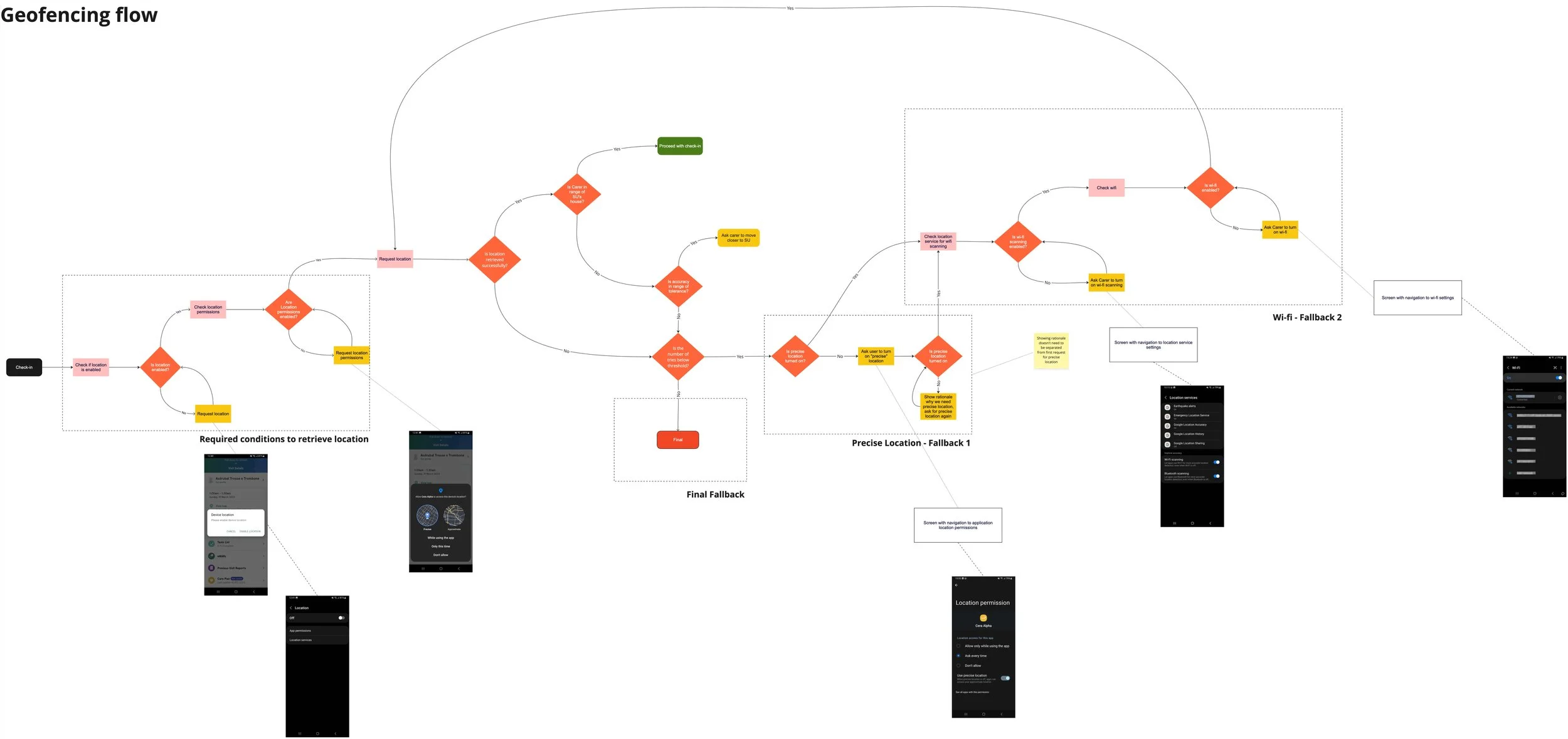
The goal was to make visit verification feel effortless for carers while increasing confidence in the data collected.
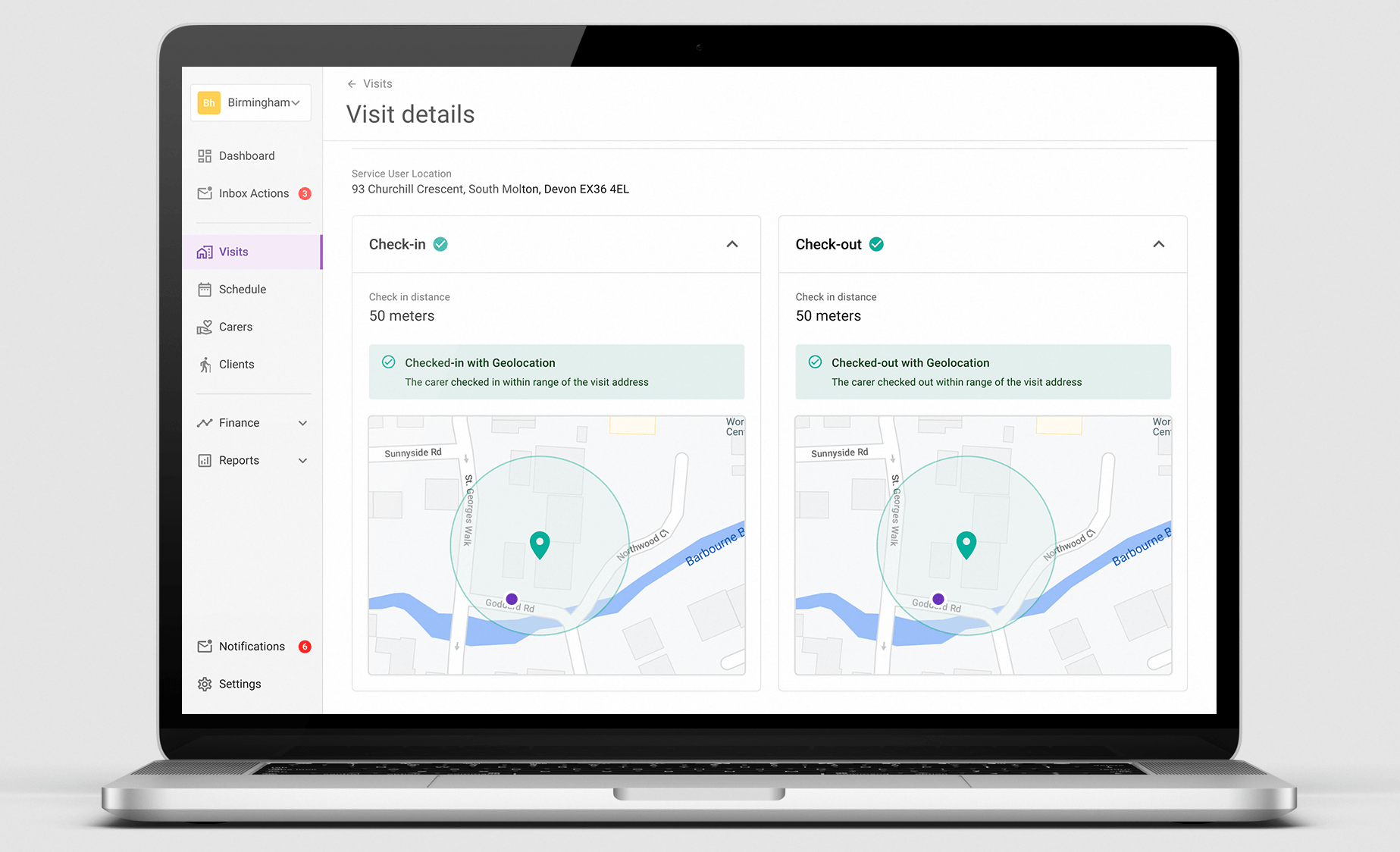
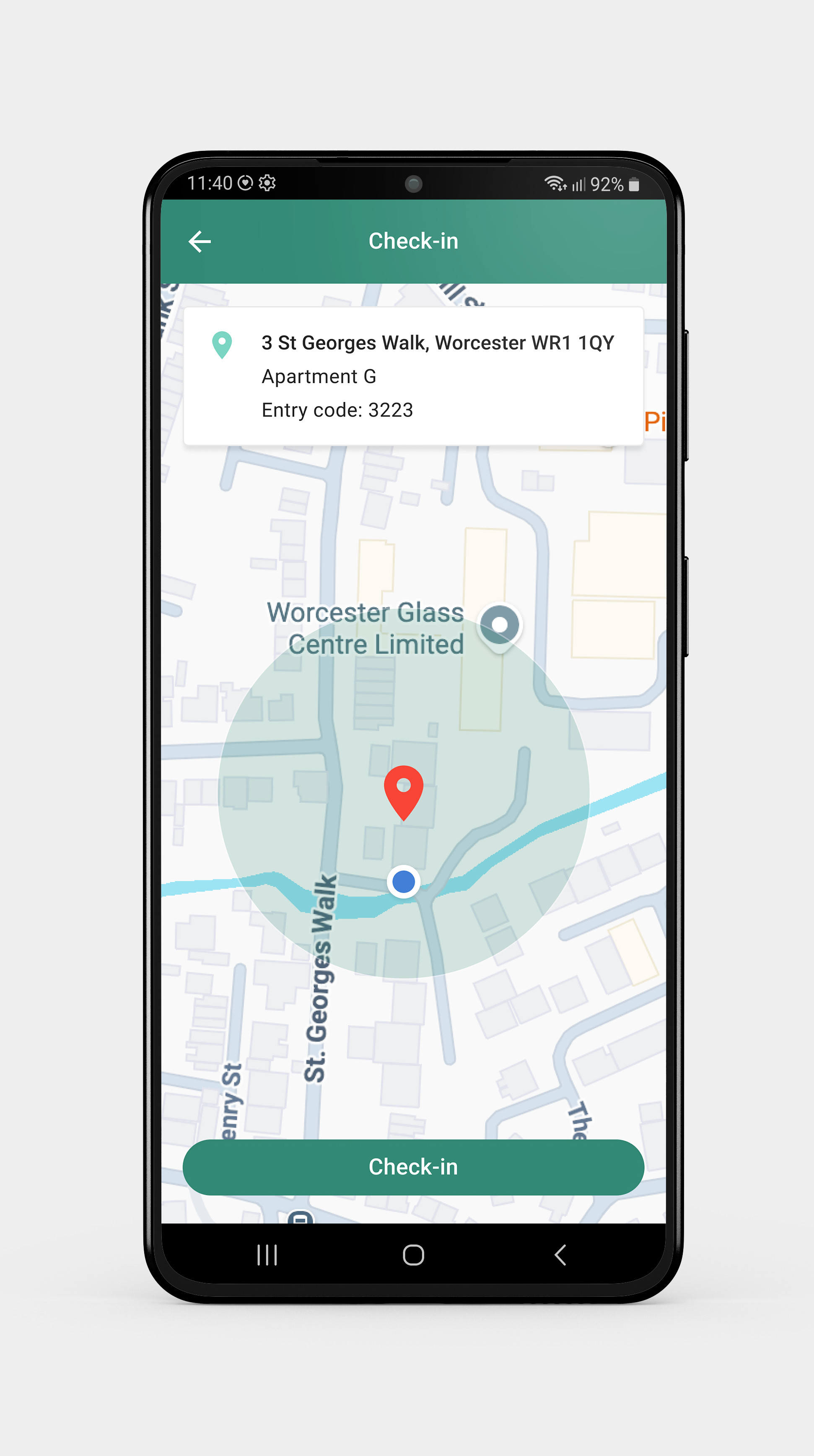
The new experience centred around automatic geolocation, allowing carers to check in and out of visits using their device's location rather than relying on physical NFC tags.
Key improvements included:
GPS-based visit verification.
Clear confirmation of successful check-in and check-out.
Improved visit history and audit information.
Better visibility for branch teams through the Digital Care Platform.
A simpler experience that reduced dependency on physical hardware.
Alongside the mobile experience, I also designed supporting tools for branch teams, enabling them to review location evidence, investigate issues and manage address accuracy more effectively.
Designing the Solution
One of the biggest discoveries during the pilot wasn't related to geolocation itself. It was the quality of the underlying address data.
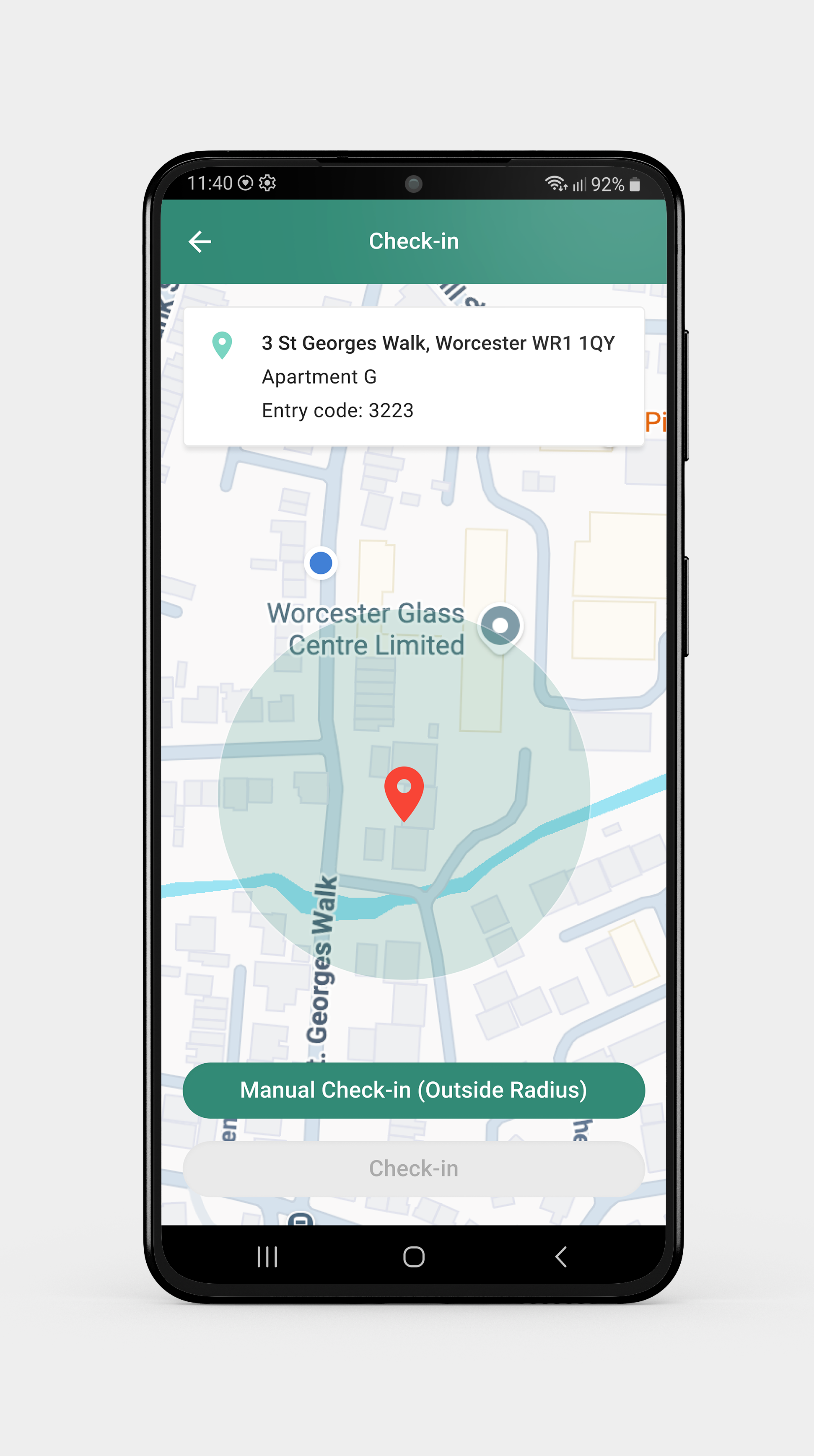
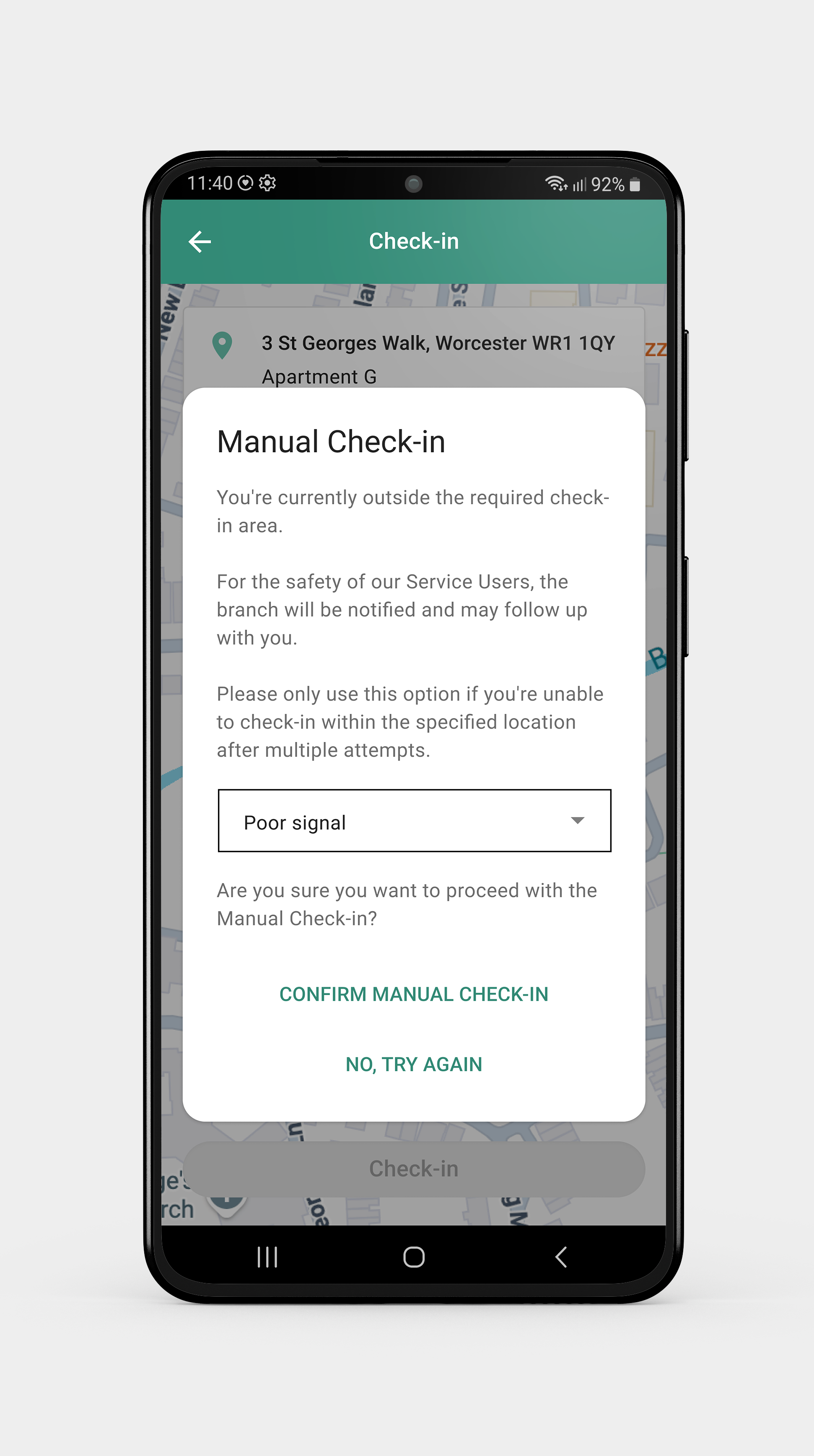
If a property's recorded location was inaccurate, genuine visits could appear outside the expected area, reducing confidence in the verification process.
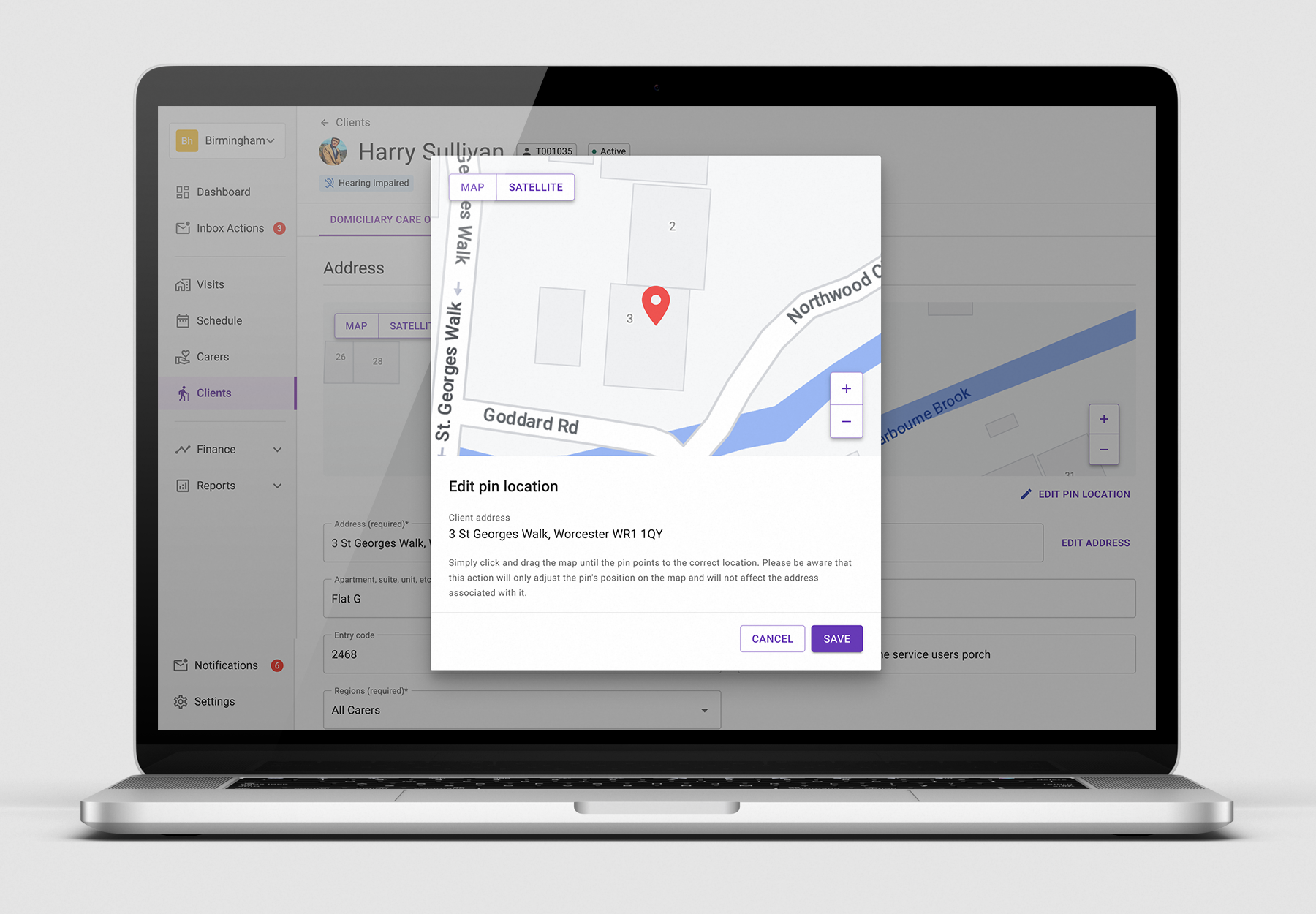
To solve this, I designed a simple map-based interface that allowed branch staff to review and adjust property locations using a draggable pin. This gave operational teams greater control over address accuracy while significantly improving the reliability of GPS verification across the platform.
By designing for both carers and branch staff, the solution improved the entire service rather than focusing on a single user group.
Solving Address Accuracy
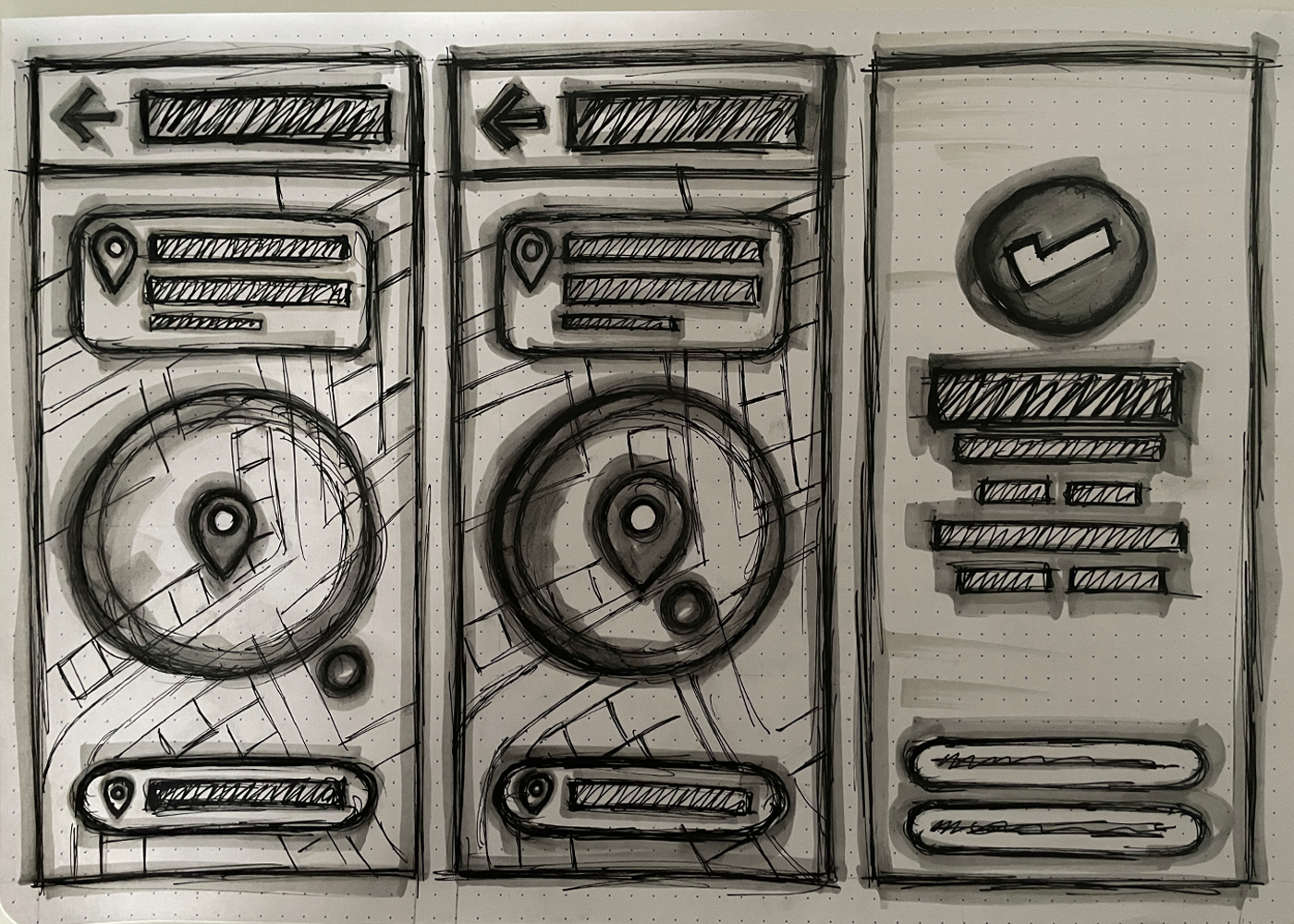
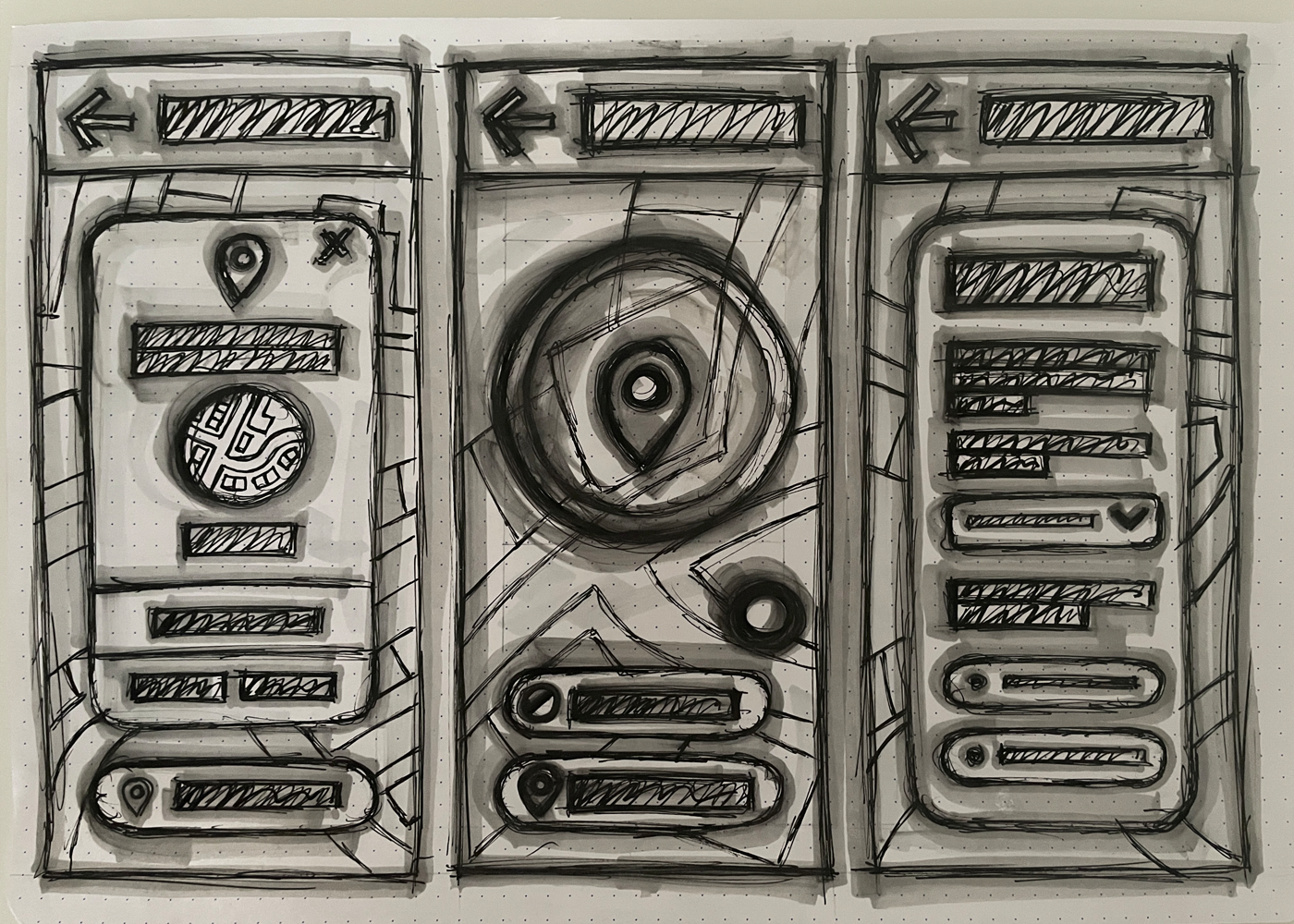
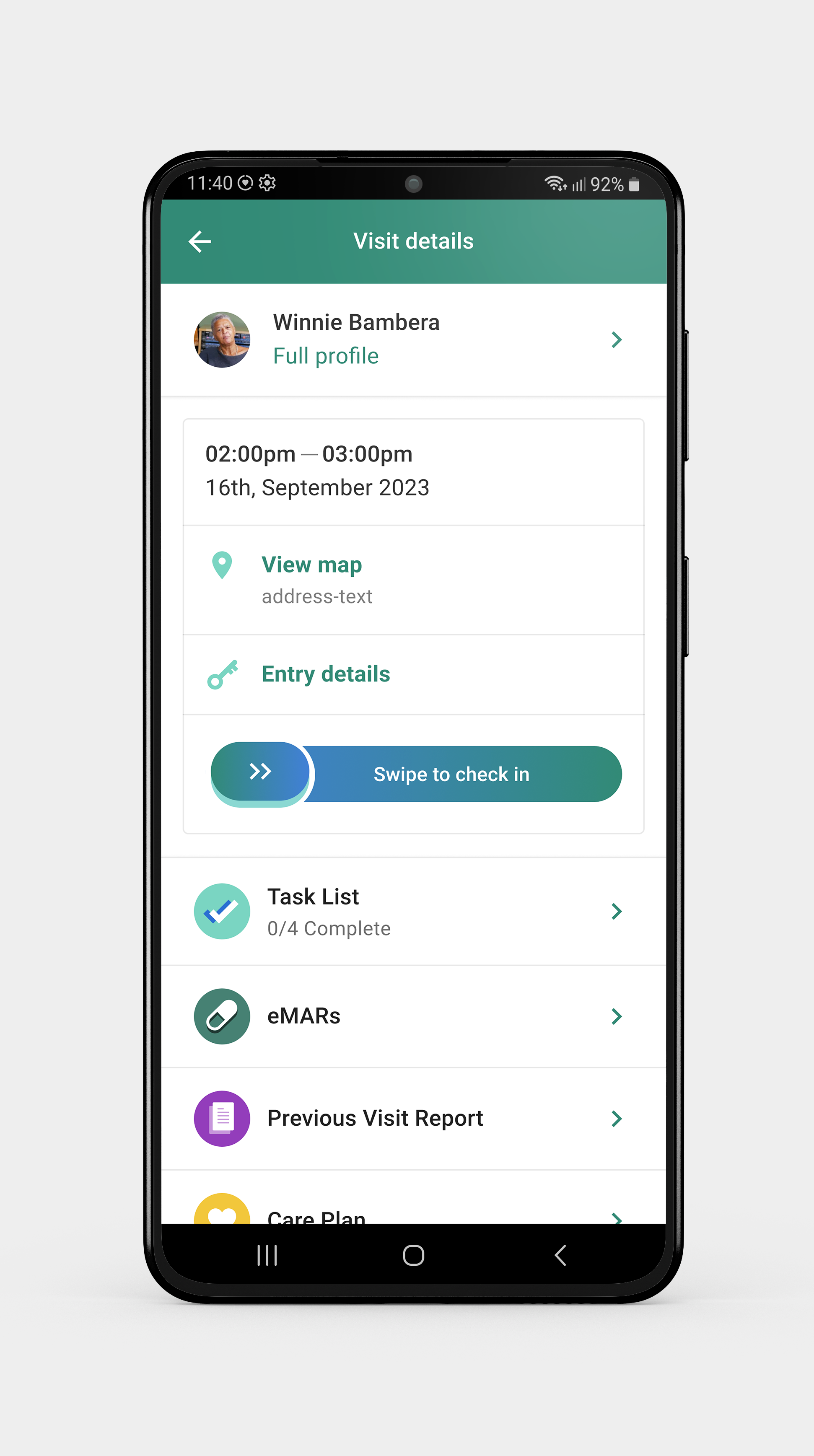
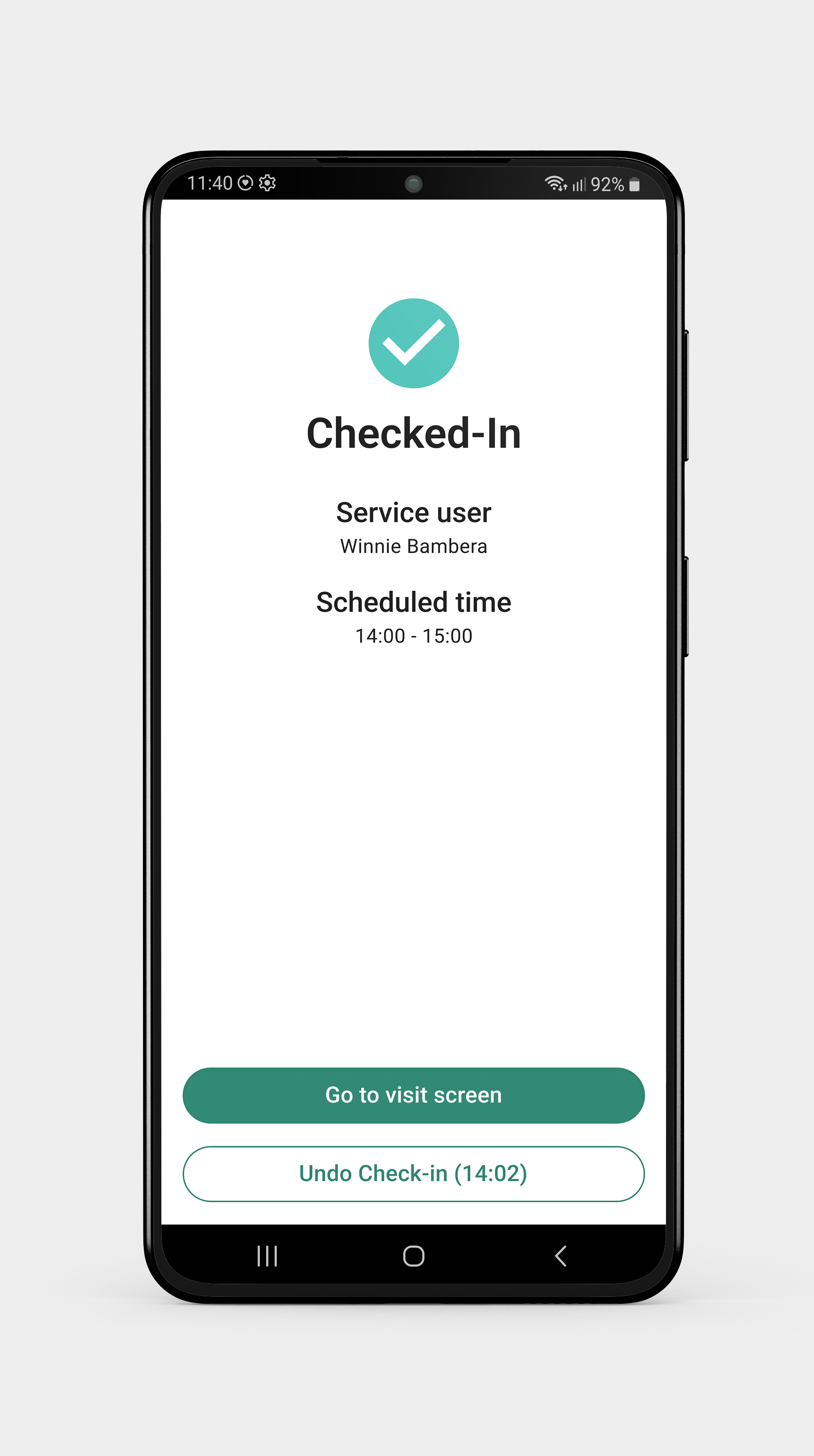
The project was piloted across four branches before a wider rollout.
Throughout testing, I worked closely with Product, Engineering and Operations teams to refine both the mobile experience and supporting branch workflows.
Testing focused on questions such as:
Could carers check in successfully without additional guidance?
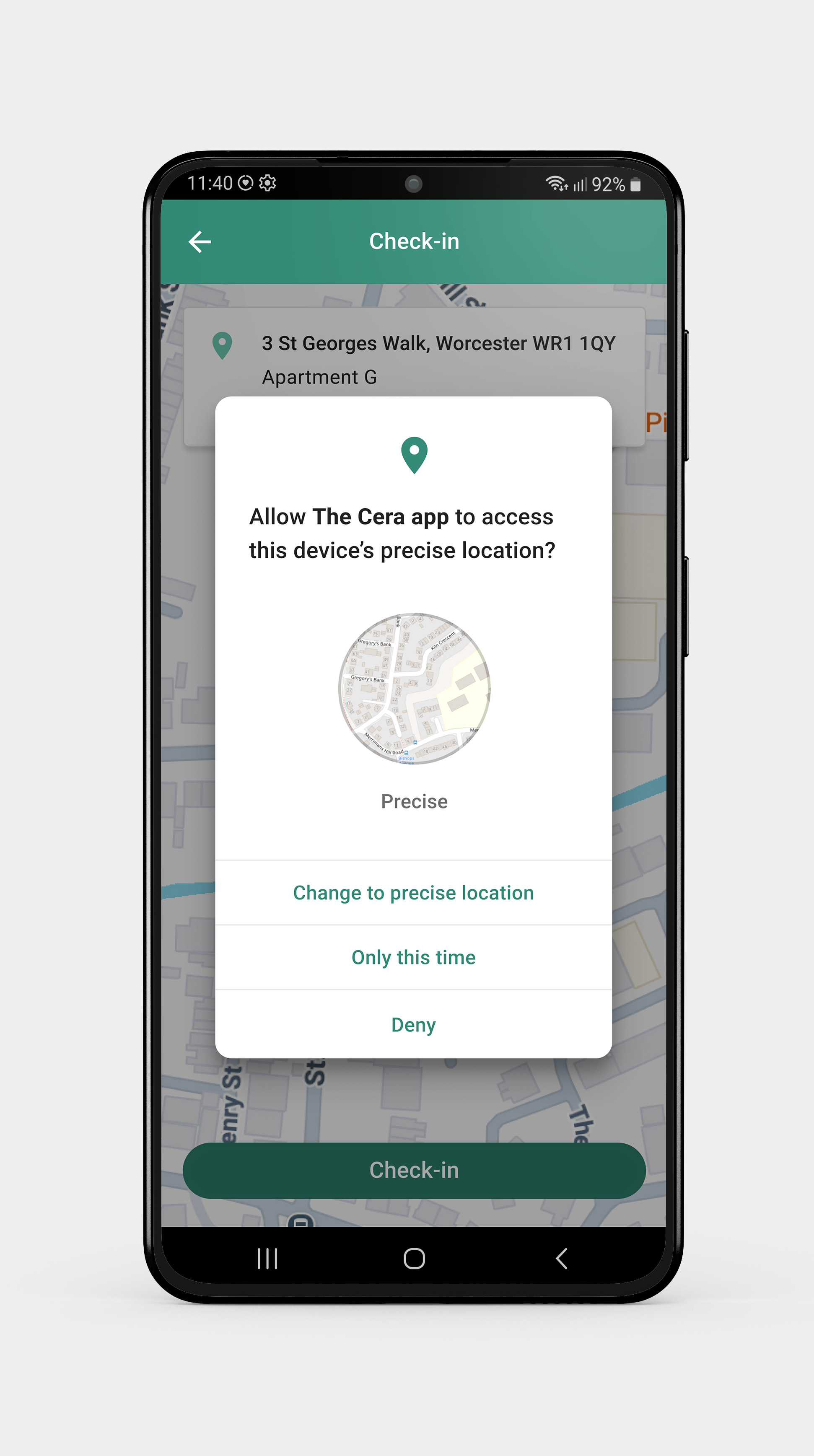
Were location permissions and status messages clear?
Did branch teams understand the new audit information?
Did the address correction workflow improve verification accuracy?
Were operational issues identified before national rollout?
Feedback from the pilot informed several iterations before the feature was expanded across the wider organisation.
Testing
The completed solution introduced a modern visit verification system that reduced friction for carers while improving operational visibility for branch teams.
Key improvements included:
GPS-based visit verification.
Improved Digital Care Platform audit trail.
Address management using map-based location editing.
Enhanced visit history and reporting.
Better operational visibility across branch teams.
Reduced reliance on physical NFC tags.
The solution created a more reliable experience for carers while providing stronger evidence for commissioners and local authorities.
Final Product
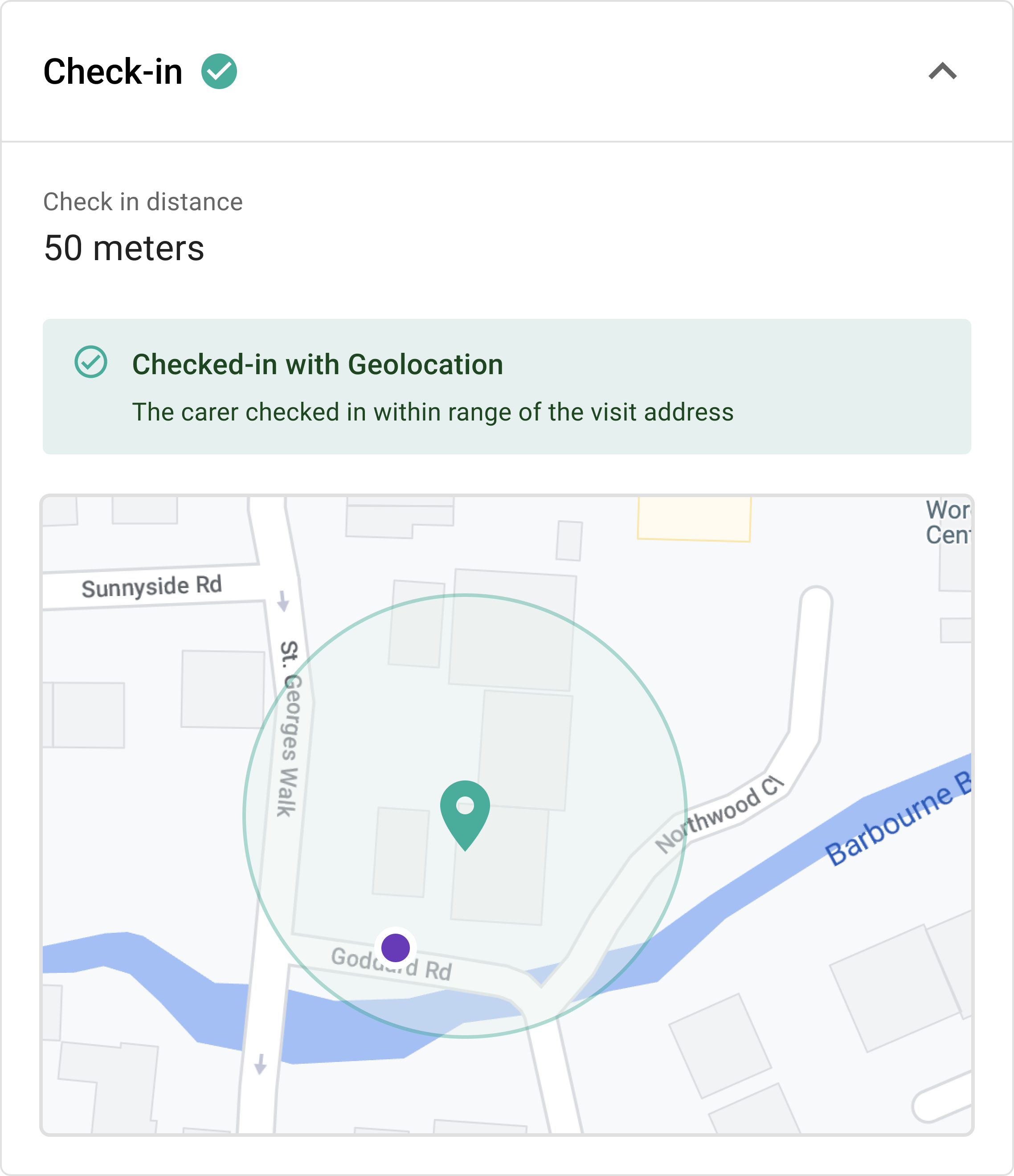
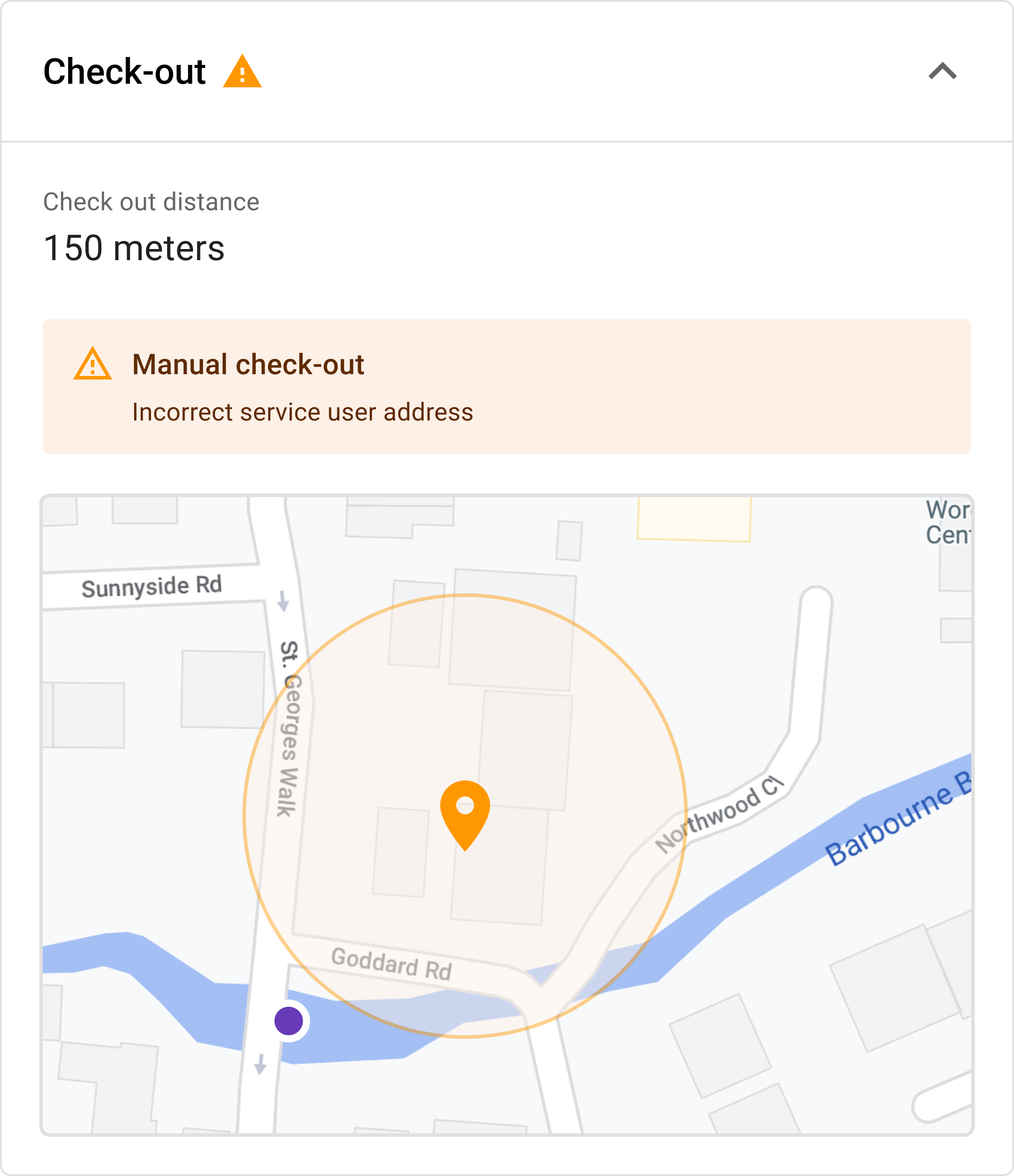
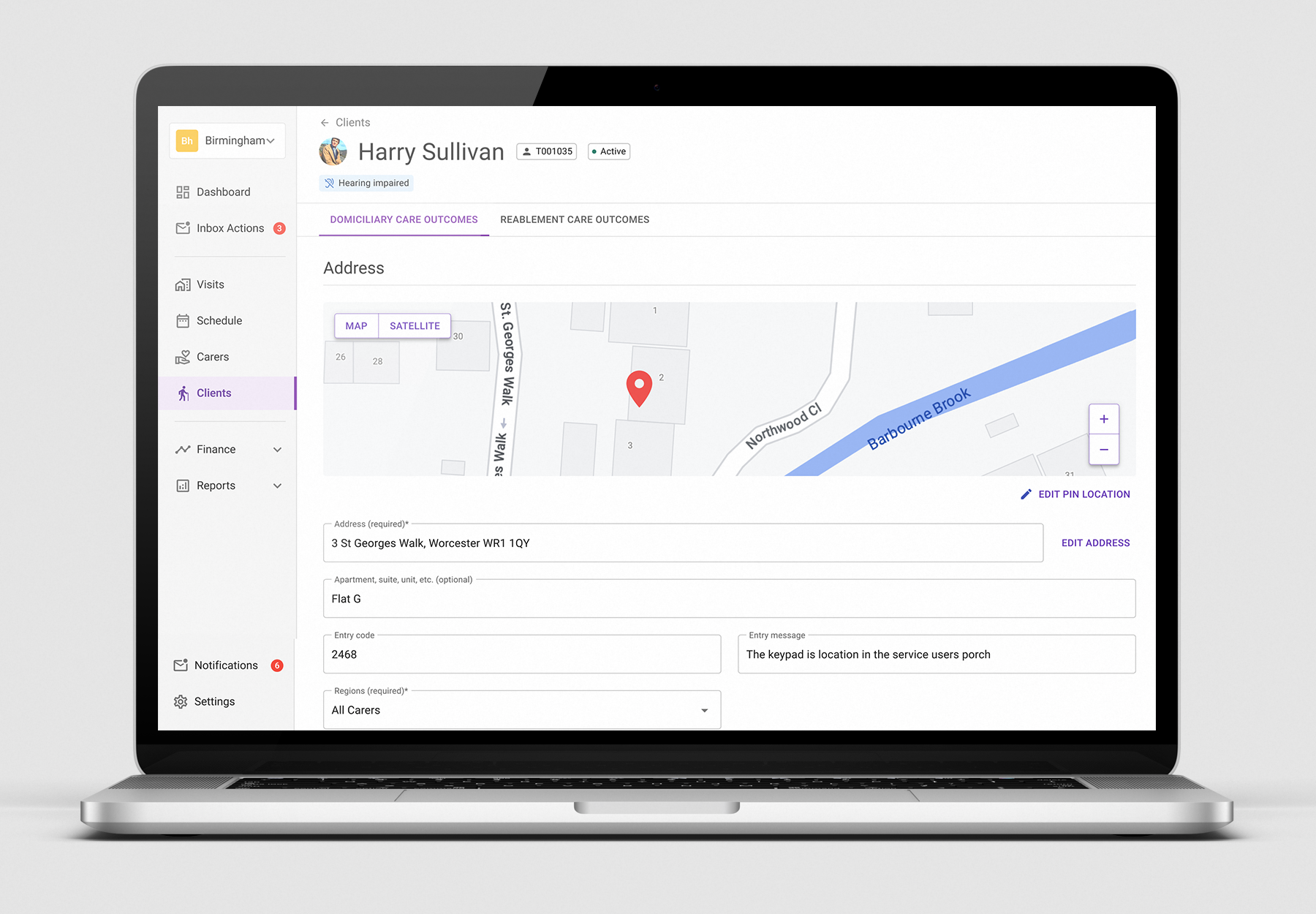
The feature delivered measurable improvements across both operational efficiency and compliance.
Following rollout:
Rolled out to 70 branches.
Adopted by 5,720 carers.
Supported over 1.3 million geolocation-verified visits.
Added location evidence to more than 500,000 additional visits.
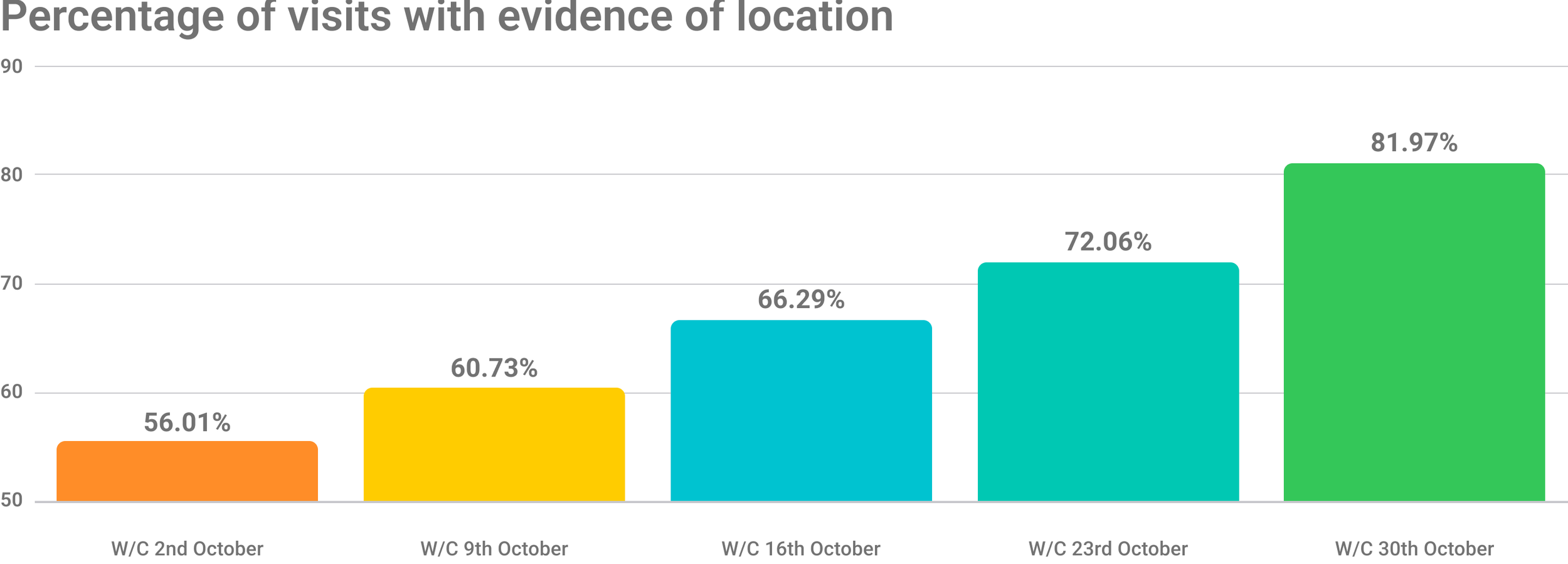
Increased verified visit evidence from 56.01% to 81.97% within four weeks.
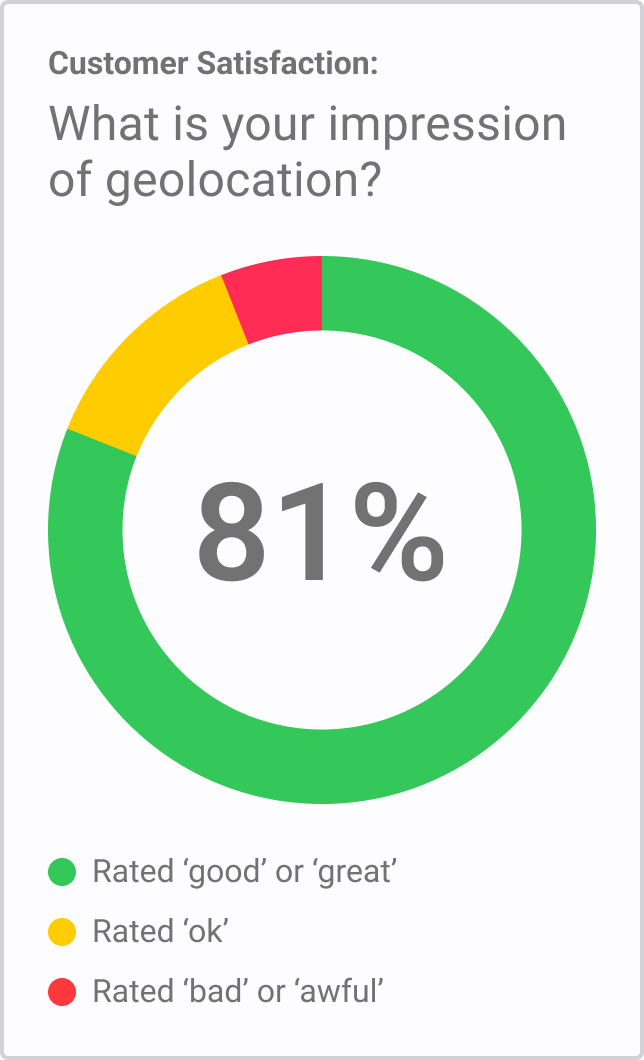
81% of carers rated the feature Good or higher.
Significantly reduced operational issues associated with NFC verification.
The project demonstrated how thoughtful product design can simplify frontline workflows while delivering measurable improvements for carers, branch teams and commissioners alike.
Measuring Success
This project reinforced the importance of looking beyond the initial problem statement.
While replacing NFC tags appeared to be the primary challenge, discovery revealed broader issues around address accuracy, operational workflows and audit confidence. Solving those underlying problems ultimately created a much stronger solution than simply introducing GPS check-ins.
Looking back, I'd invest even more time validating address quality before development began. Identifying those issues earlier would have reduced iteration during the pilot and accelerated rollout, but the experience reinforced the value of continuous discovery and close collaboration throughout the product lifecycle.
Reflection