Cera Care: Designing AI that helps prevent falls.
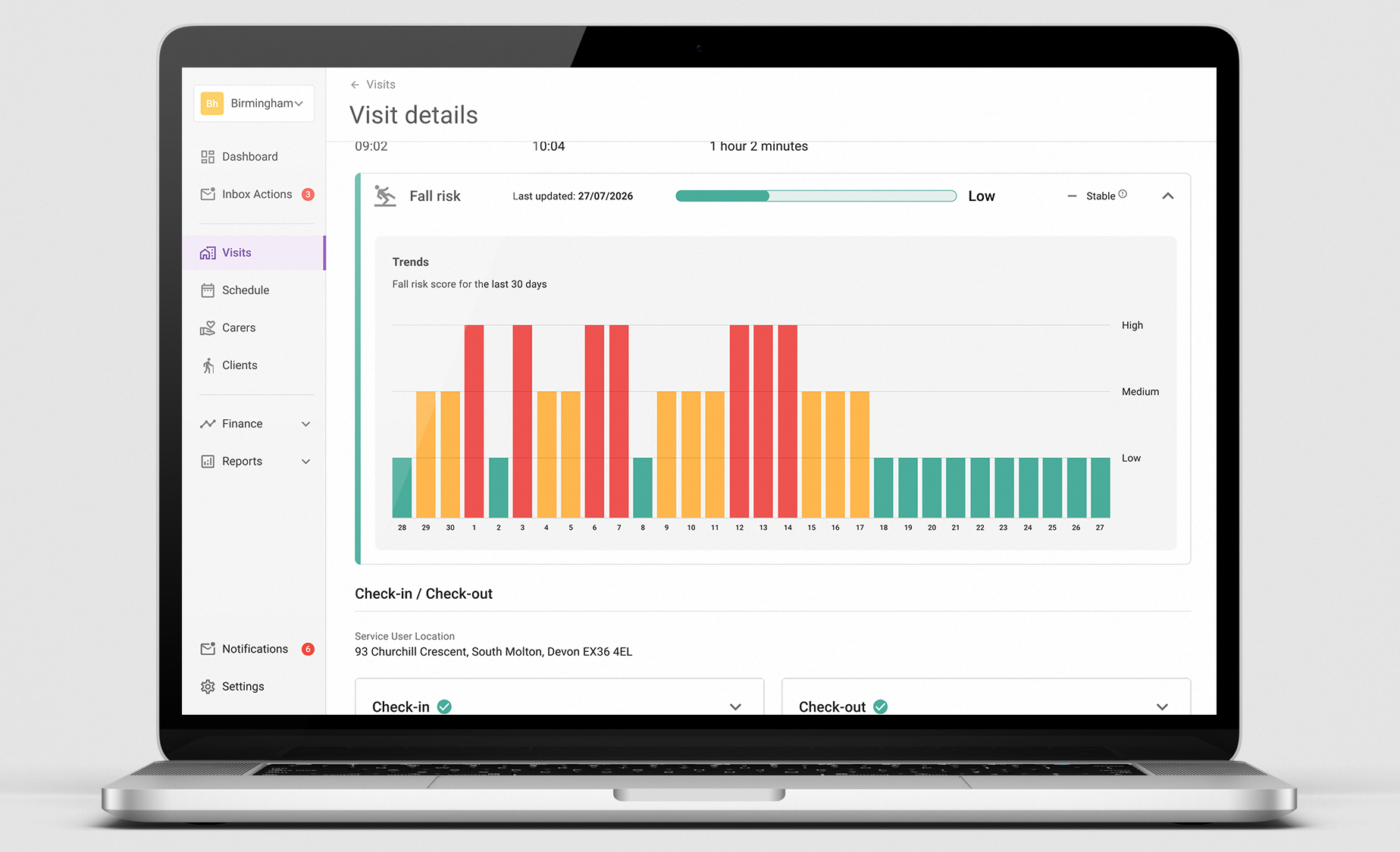
Falls are one of the biggest causes of injury and hospital admission for older adults receiving care at home. While Cera collected large amounts of care data every day, teams were only able to react after an incident had already happened.
Working closely with Product Managers, clinicians, engineers and the Data Science team, I helped design a new Falls Risk feature that translated complex AI predictions into clear, actionable information for branch teams. The goal wasn't to replace clinical judgement, but to help carers recognise changing risk earlier and take preventative action before a fall occurred.
Care teams relied on experience and individual observations to identify people who might be at risk of falling. Although carers recorded valuable information during every visit, there was no easy way to recognise subtle trends across weeks of care.
As a result:
Falls were often identified only after an incident had occurred.
Branch teams had limited visibility of changing risk across large caseloads.
Valuable care data wasn't being used to support preventative interventions.
Opportunities to reduce hospital admissions and improve outcomes were being missed.
The challenge was to transform complex clinical and behavioural data into something carers could understand and trust during their everyday workflow.
The Problem
Rather than beginning with an AI solution, we started by understanding how branch teams currently assessed risk and where existing processes fell short.
Through workshops with Product, clinicians and the Data Science team, we explored the information already being collected during visits, including care plans, medication records and daily observations. Research showed that small changes across multiple data points could indicate someone becoming increasingly vulnerable, even when those changes weren't immediately obvious to carers.
This led to the development of an AI model capable of predicting an increased risk of falling up to seven days in advance.
My role was designing the experience around those predictions, ensuring the information felt understandable, trustworthy and actionable for non-technical users.
Understanding the Problem

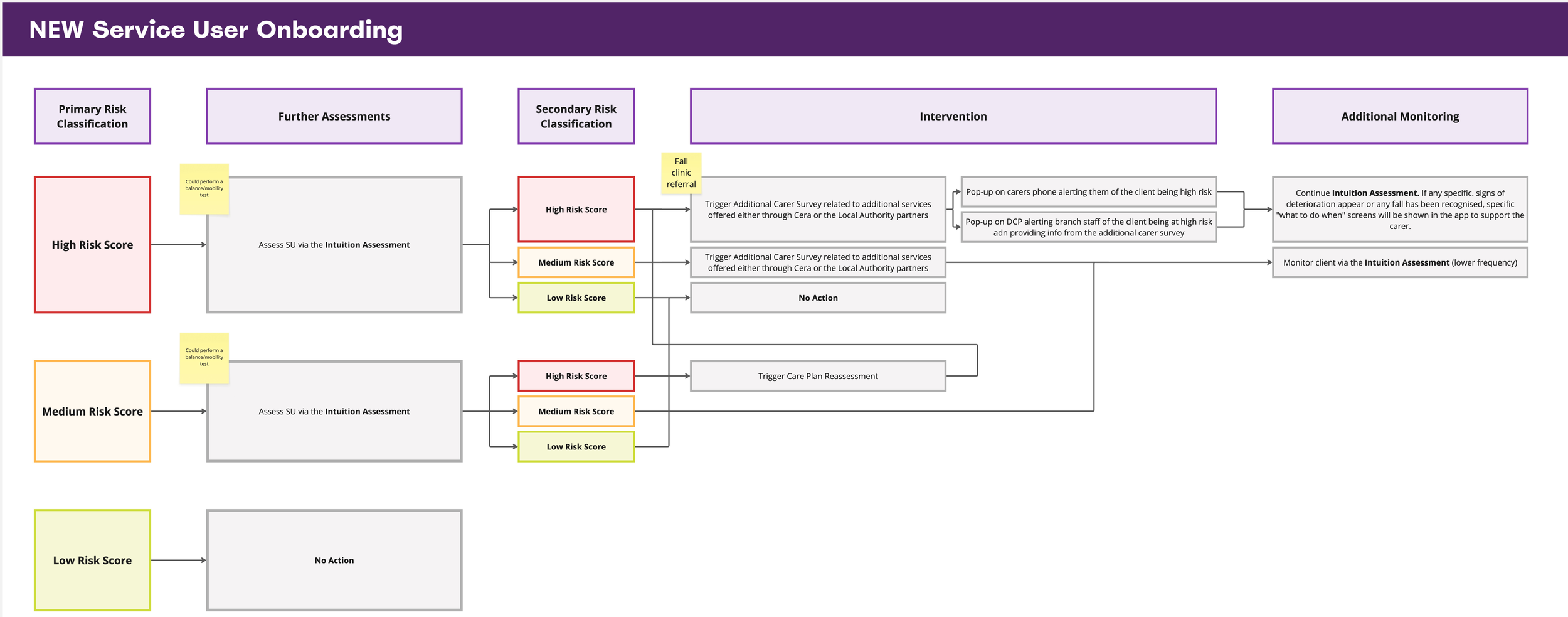
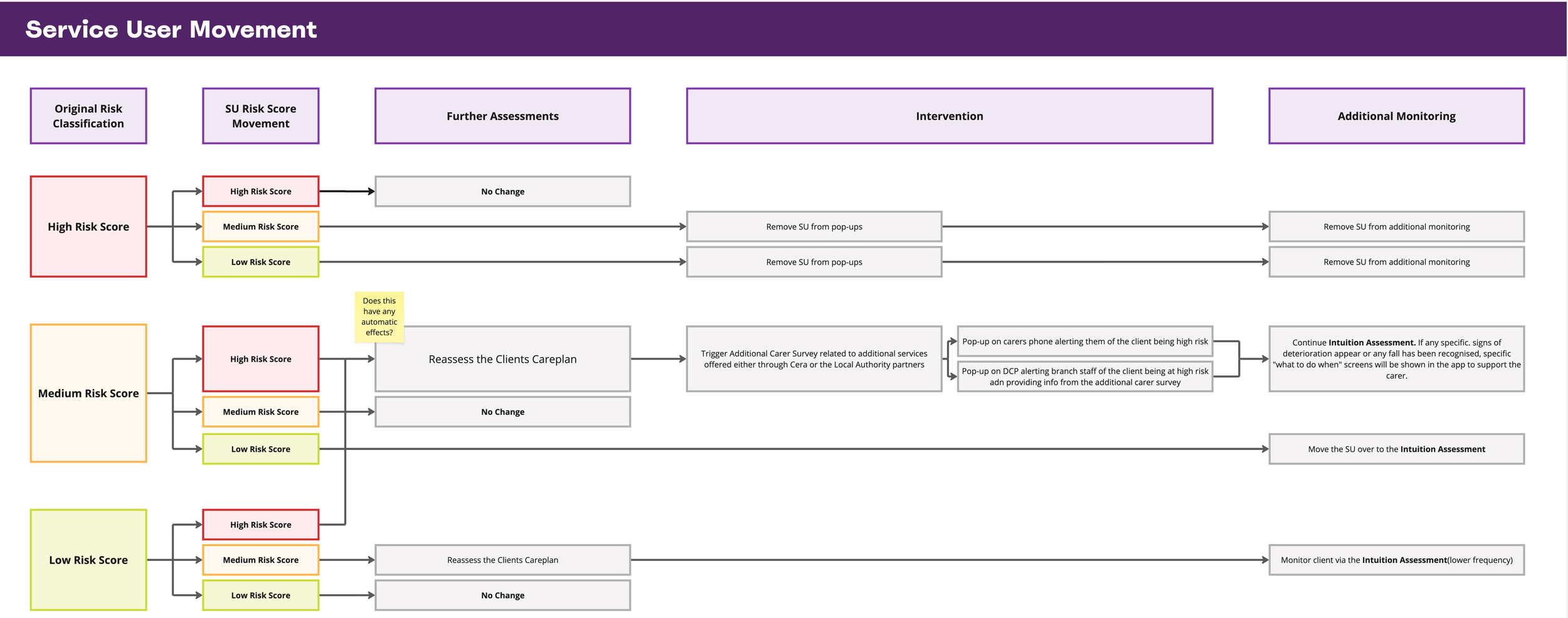
One of the biggest design challenges was presenting complex AI predictions without overwhelming users.
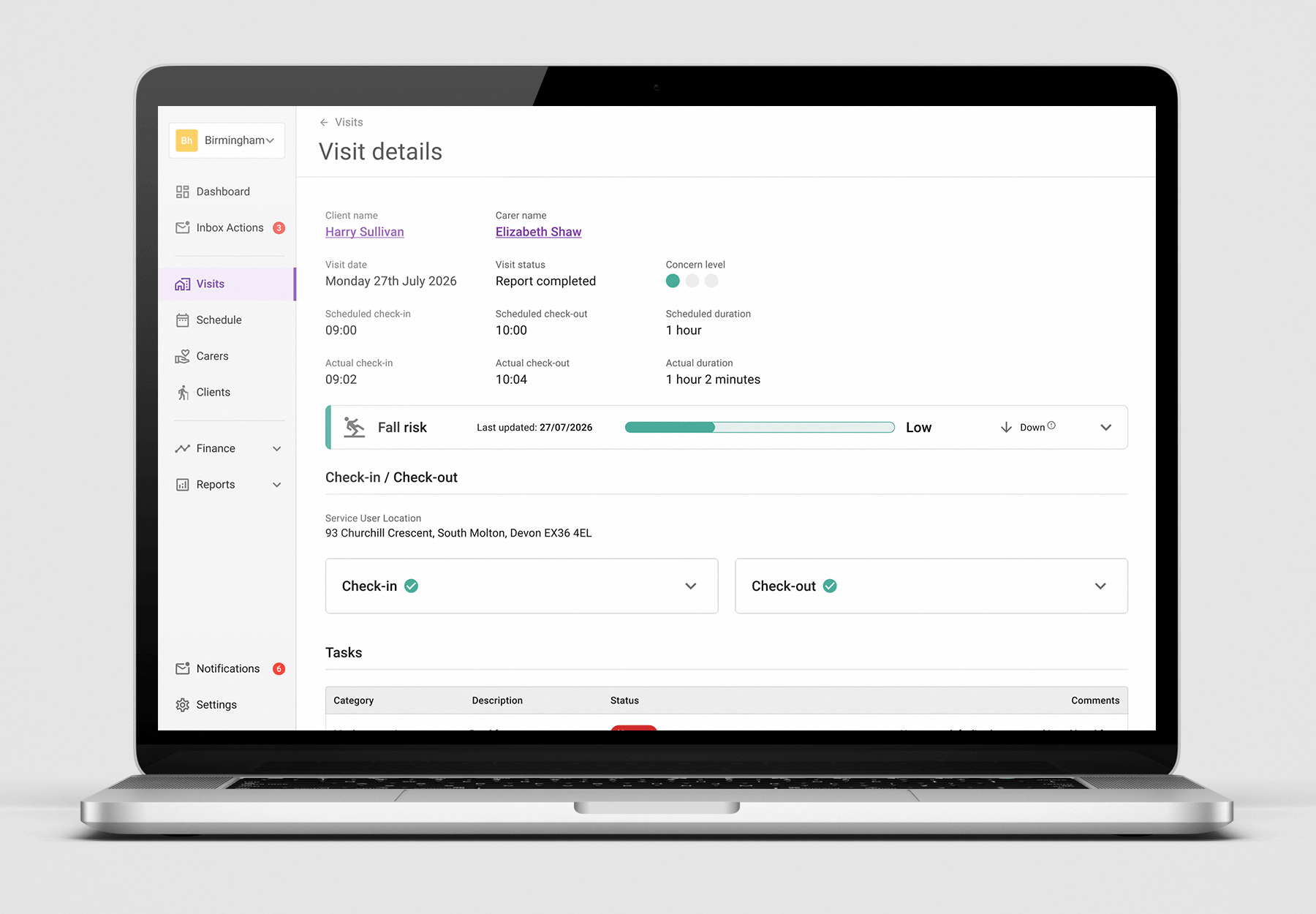
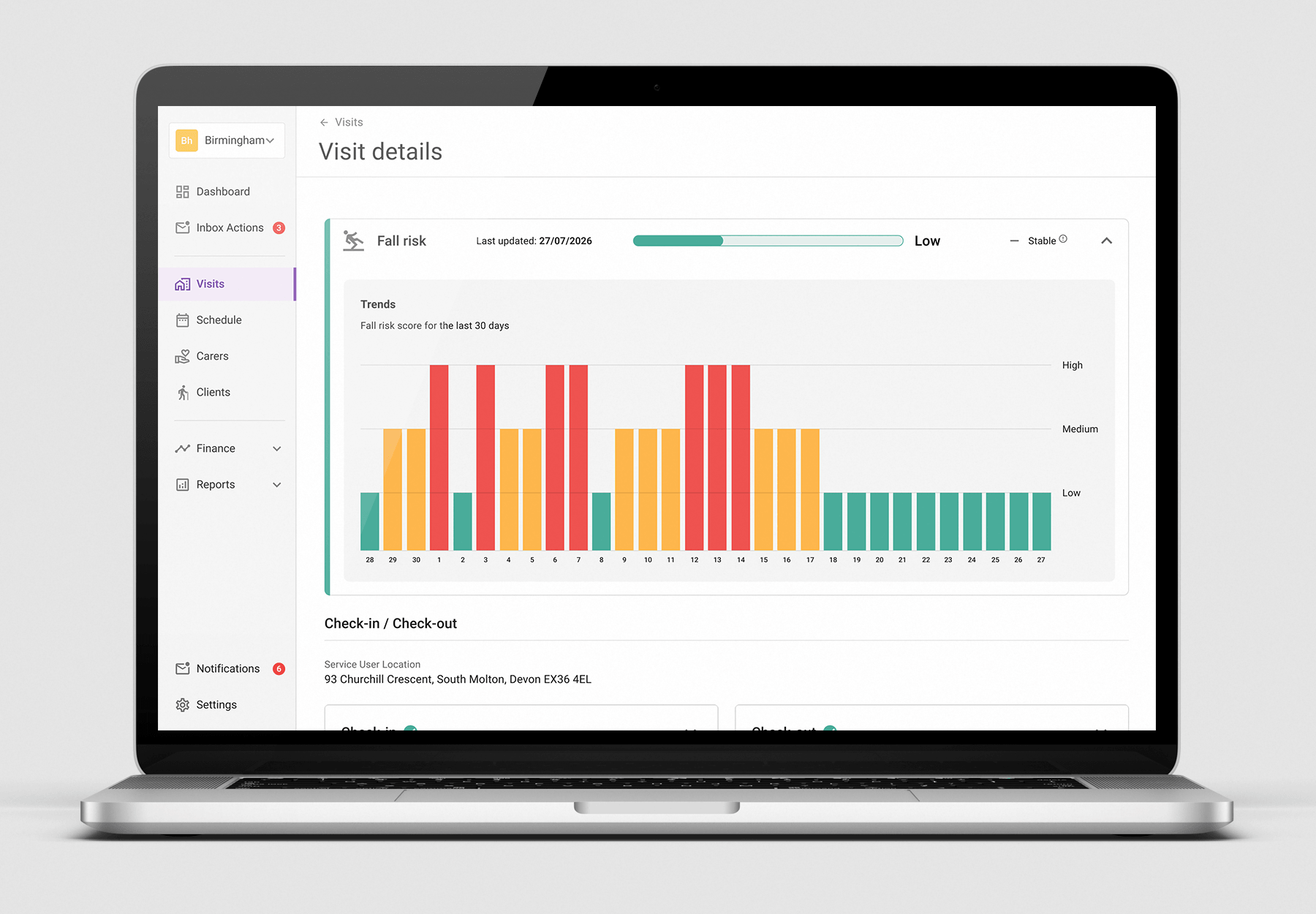
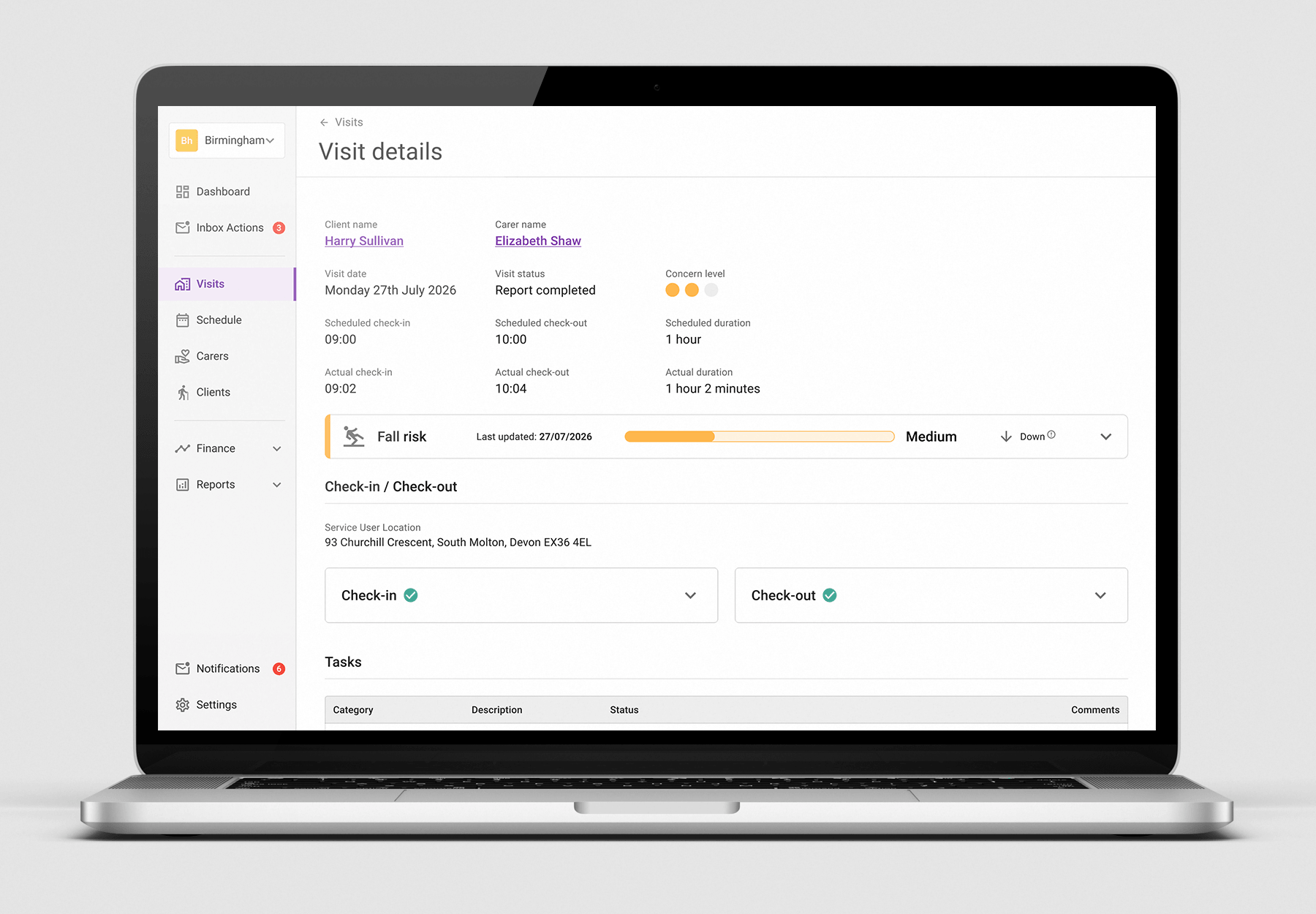
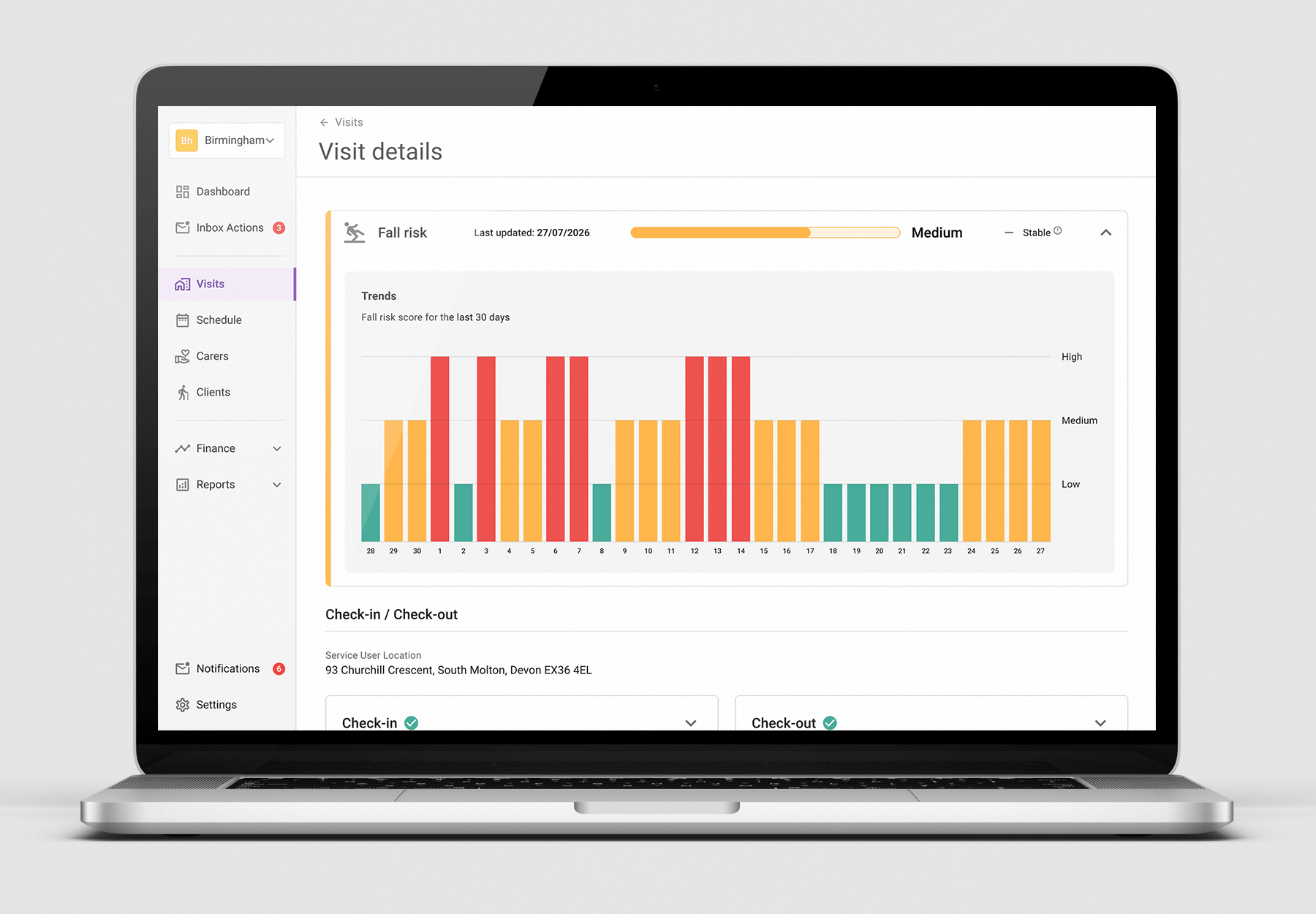
Rather than exposing confidence scores or technical probabilities, I designed a simple three-tier risk system using familiar traffic-light colours:
Low risk = Green
Medium risk = Amber
High risk = Red
This allowed branch teams to understand the level of urgency at a glance while keeping the interface accessible for users with varying levels of technical confidence.
Alongside the overall risk level, the interface surfaced the factors contributing to the prediction, helping carers understand why someone had been flagged and supporting informed decision making rather than blind trust in the AI.
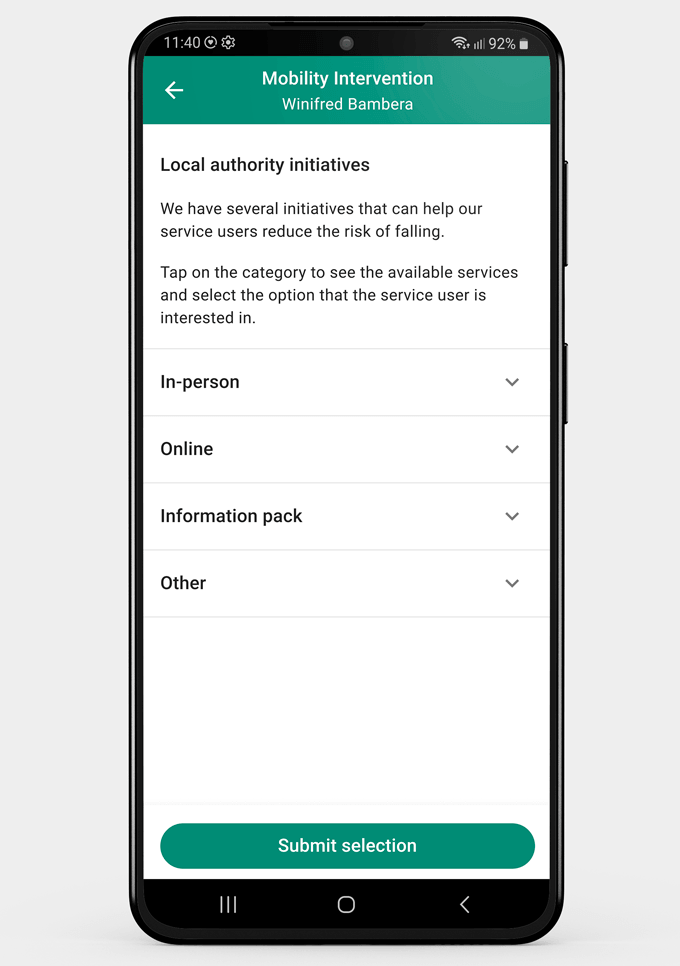
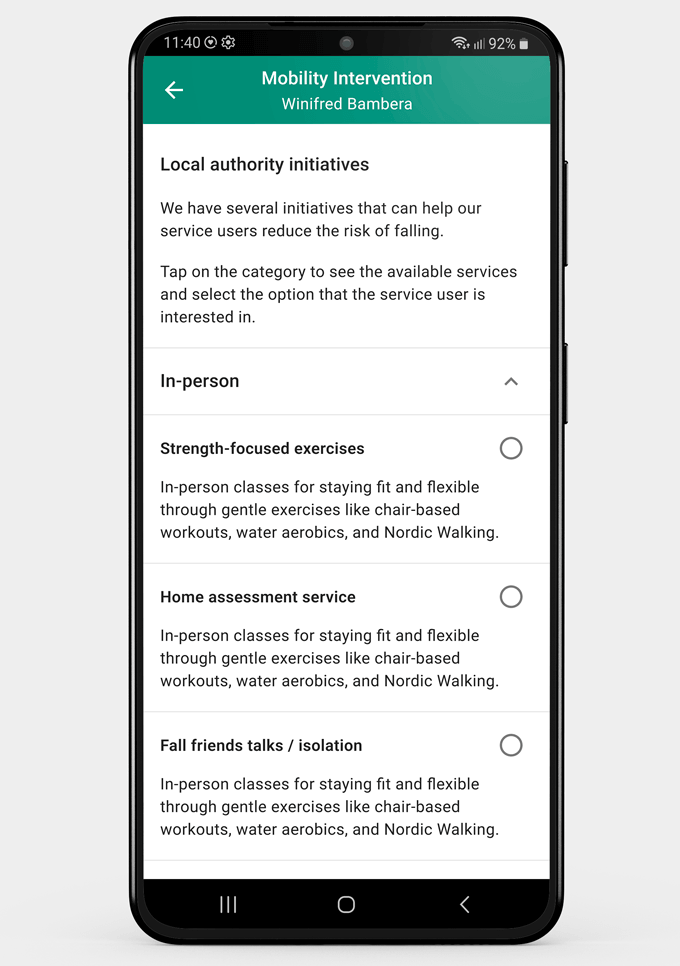
The experience was designed to fit naturally into existing workflows, allowing teams to prioritise visits and intervene earlier without introducing unnecessary complexity.
Designing the Solution
As the designs evolved, it became clear that improving the quality of data entering the system would strengthen future predictions.
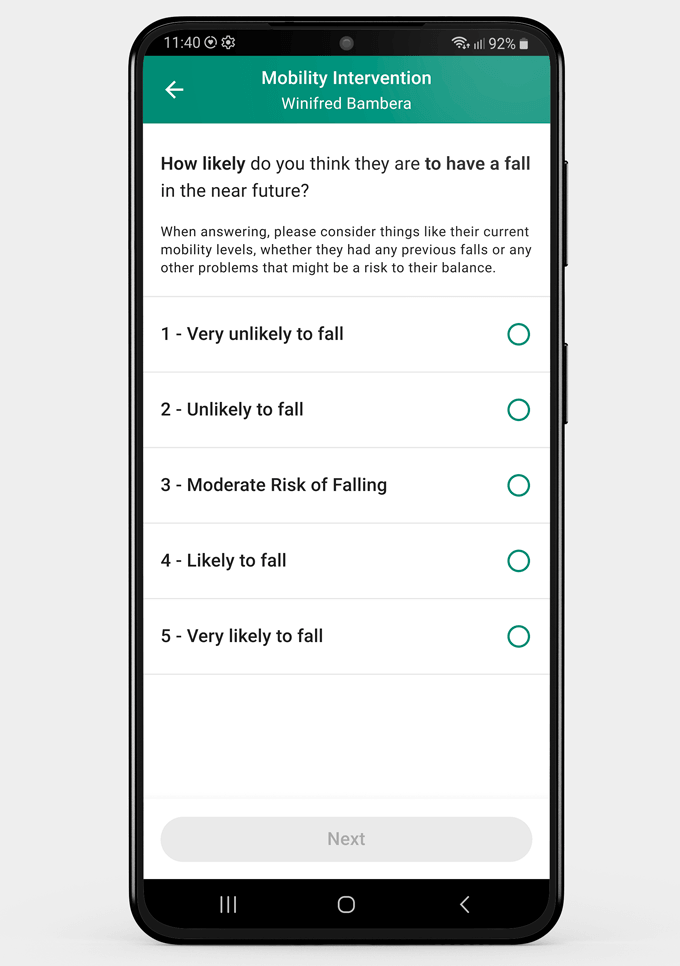
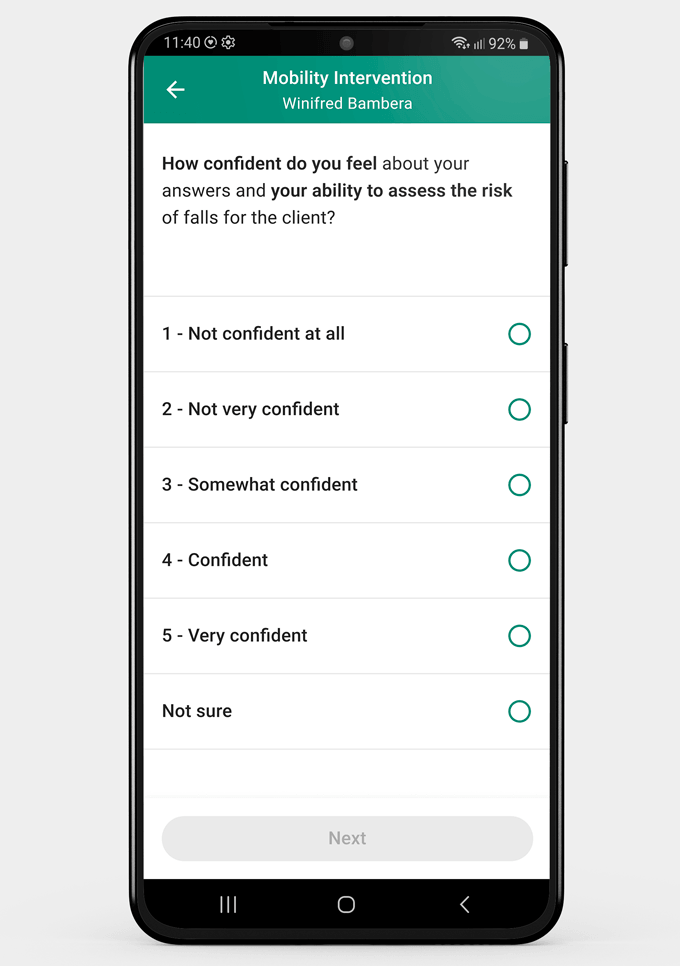
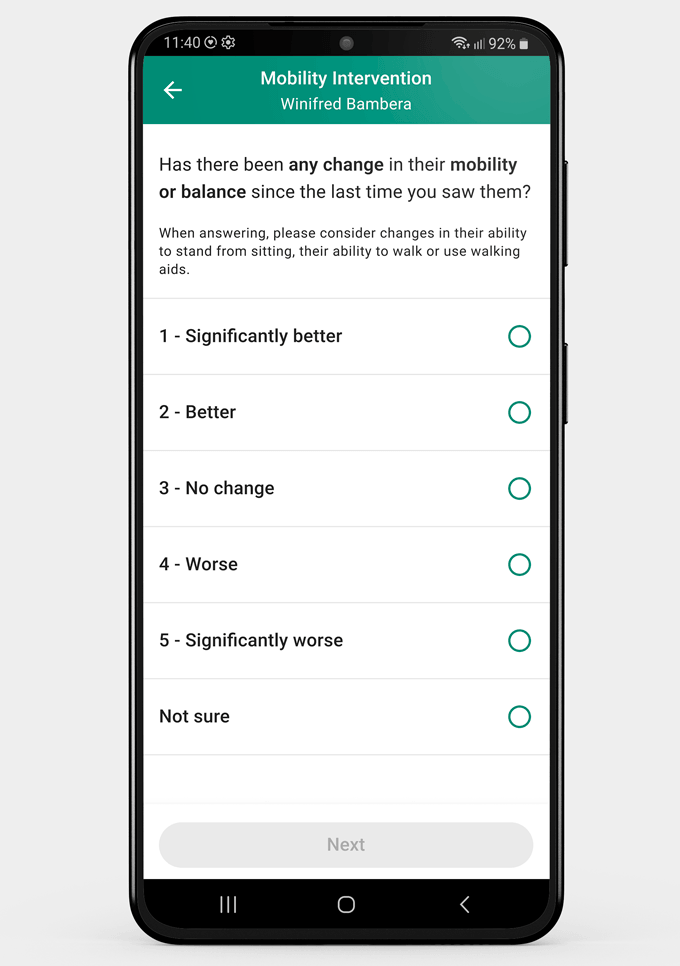
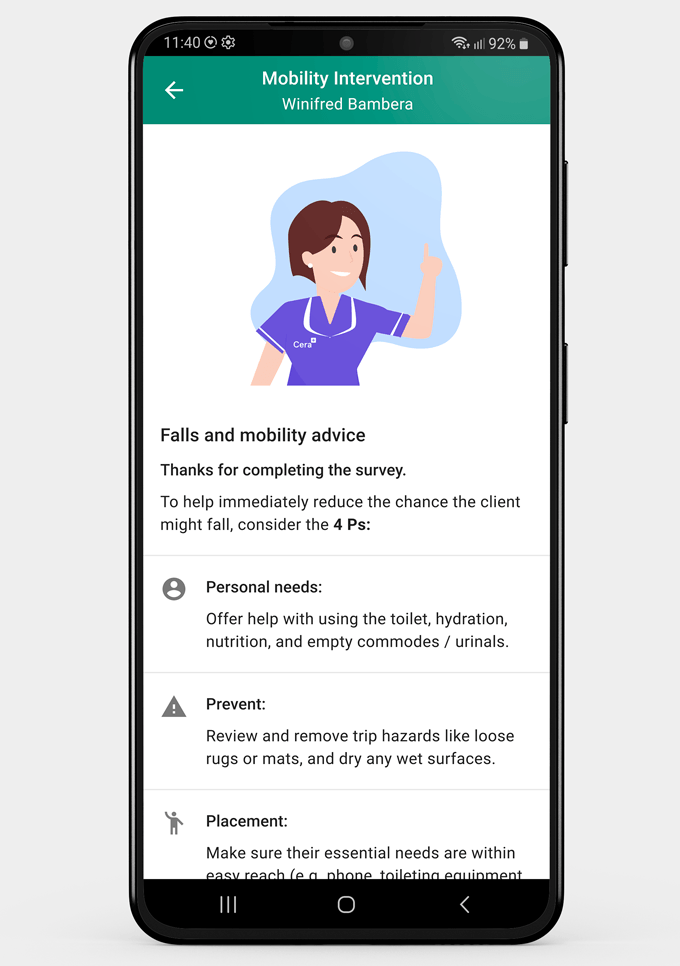
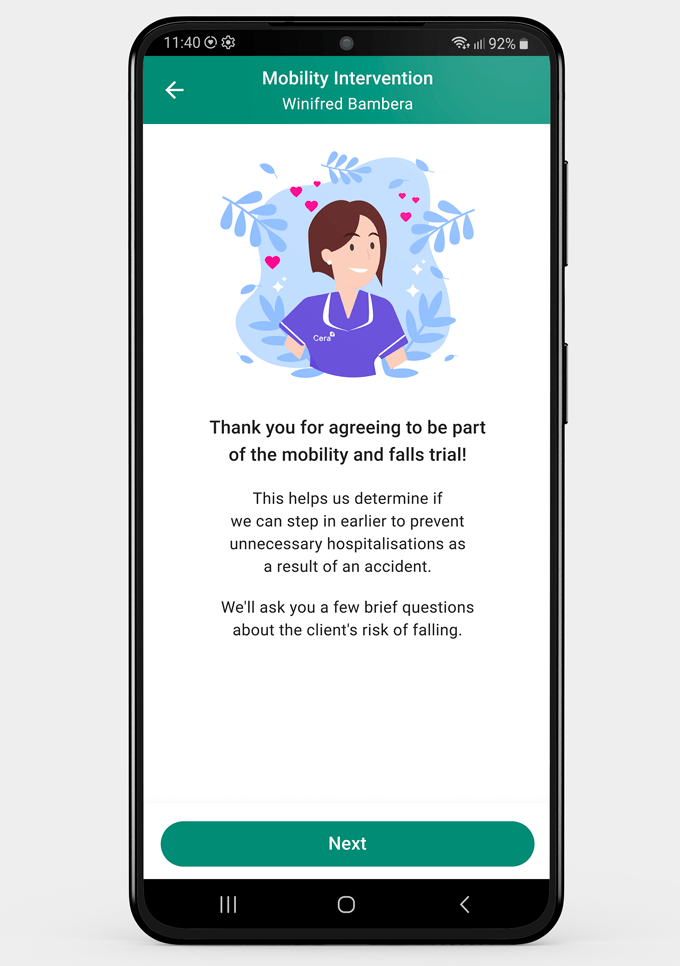
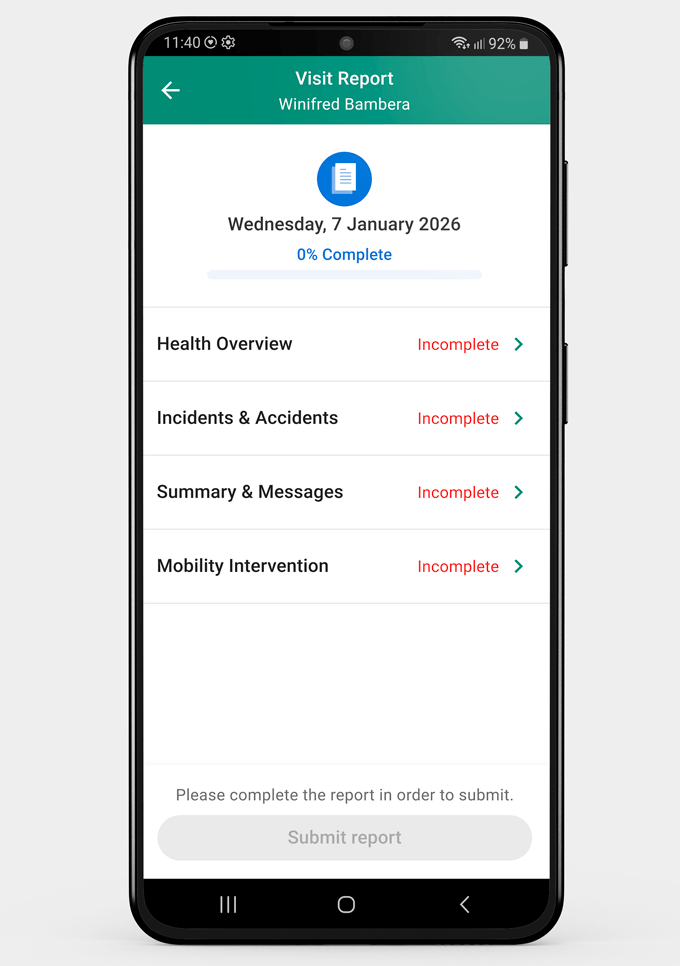
I identified an opportunity within the existing visit report to capture more consistent information about falls. Rather than creating additional workflows, I introduced a dedicated falls-related question that carers could answer during every visit.
This small addition required very little extra effort from carers while creating a continuous feedback loop that improved the quality of data available to the AI model over time.
The feature wasn't just displaying predictions. It was also helping make future predictions more accurate.
Improving the Quality of Data
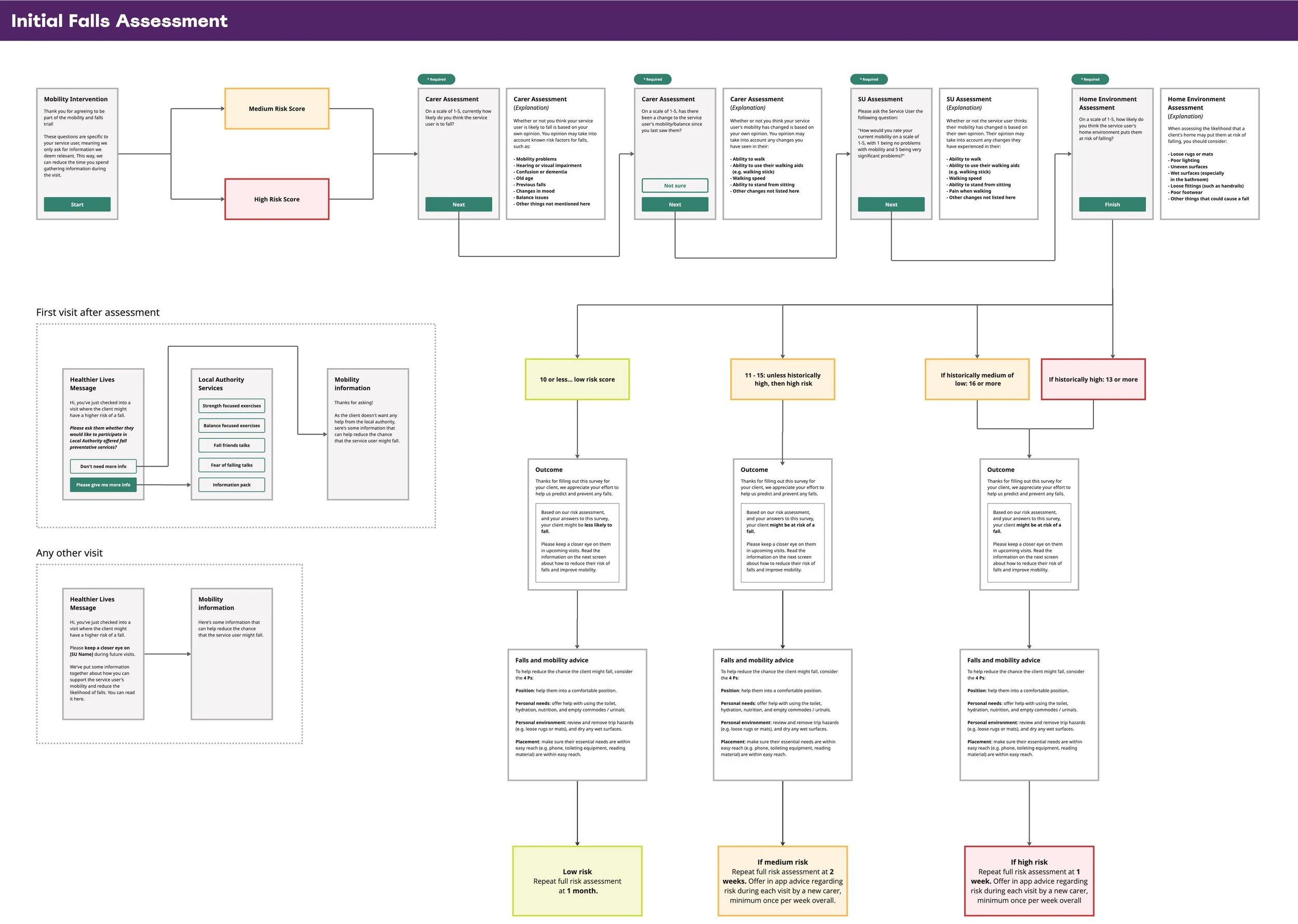
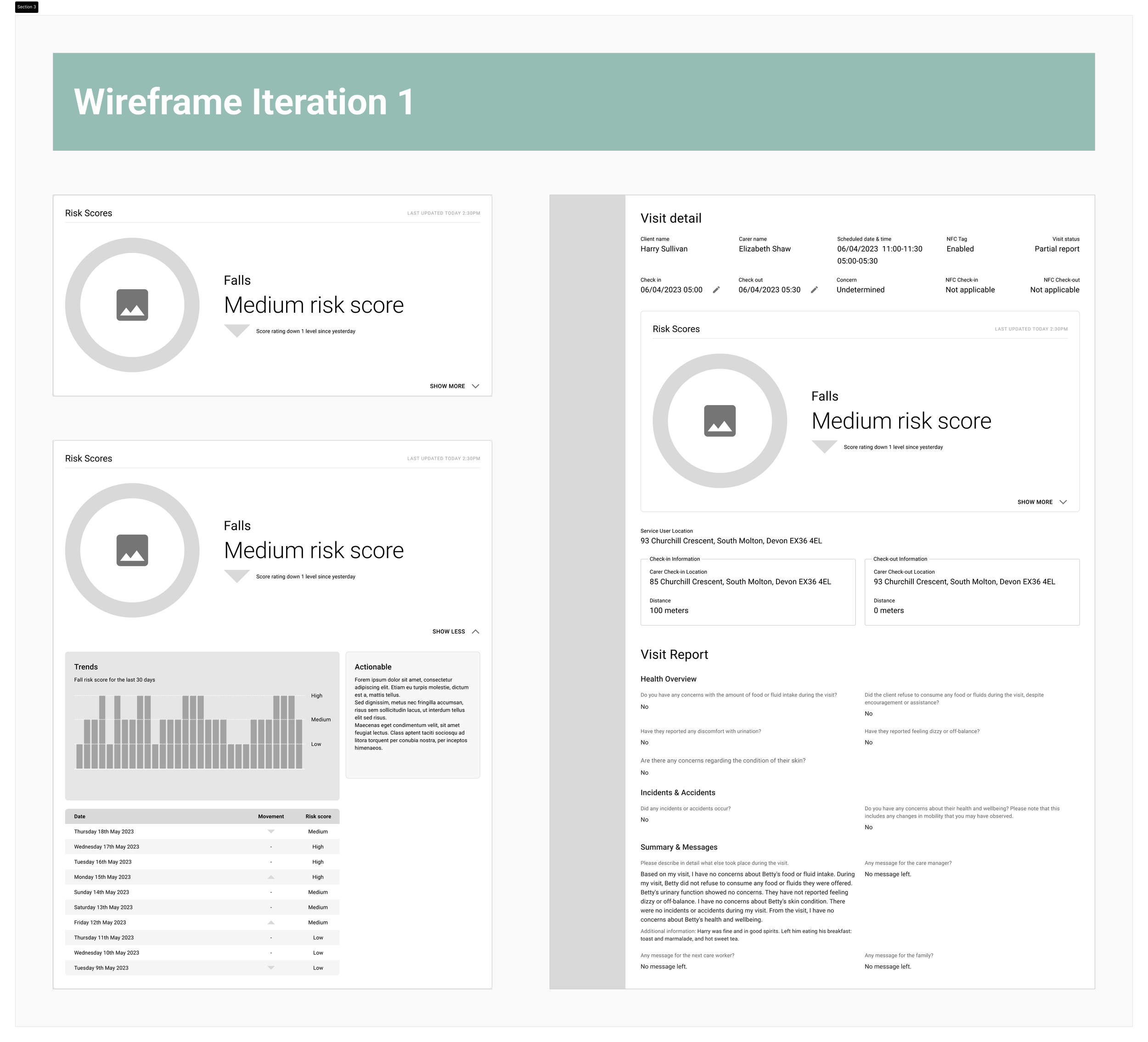
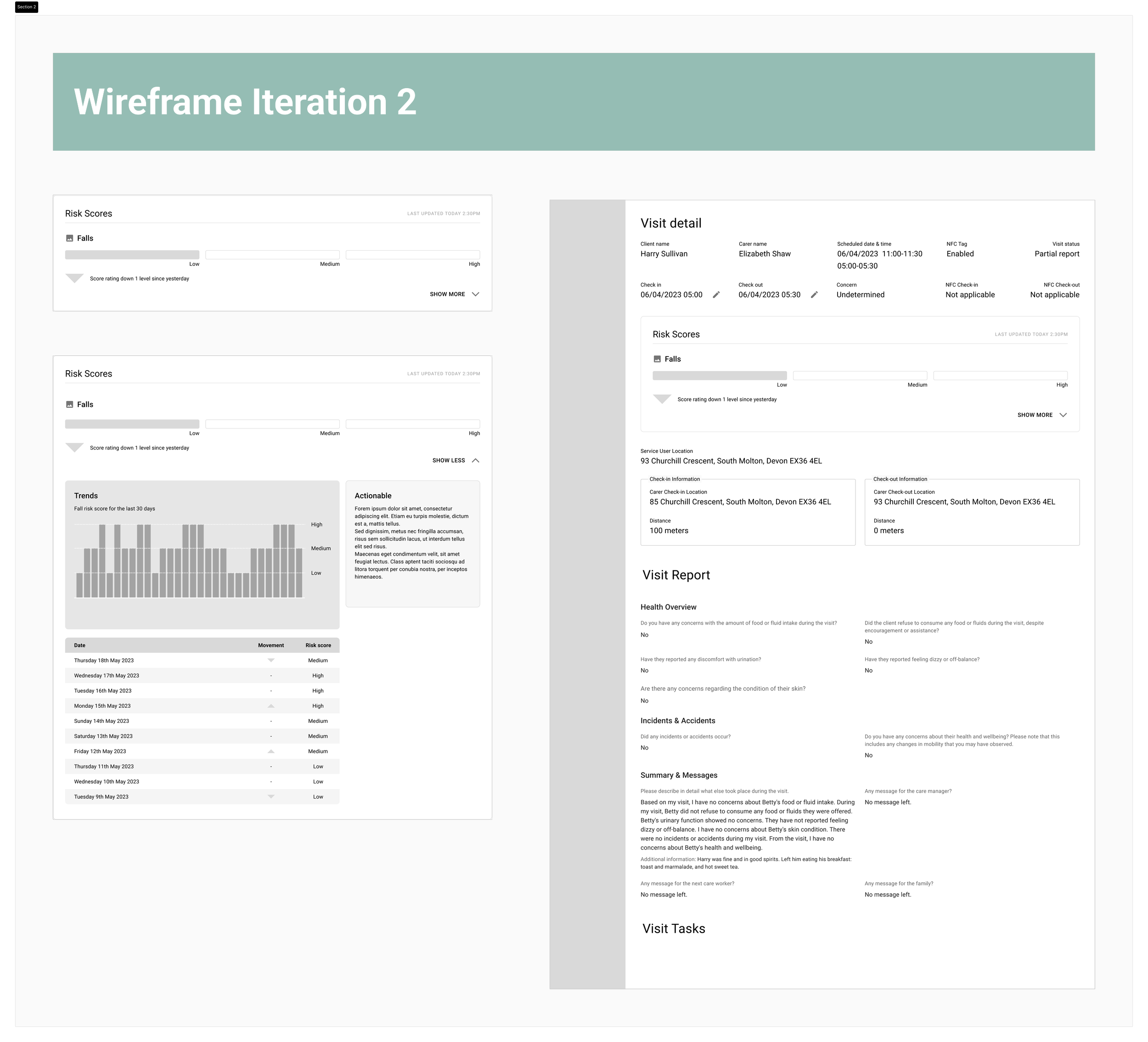
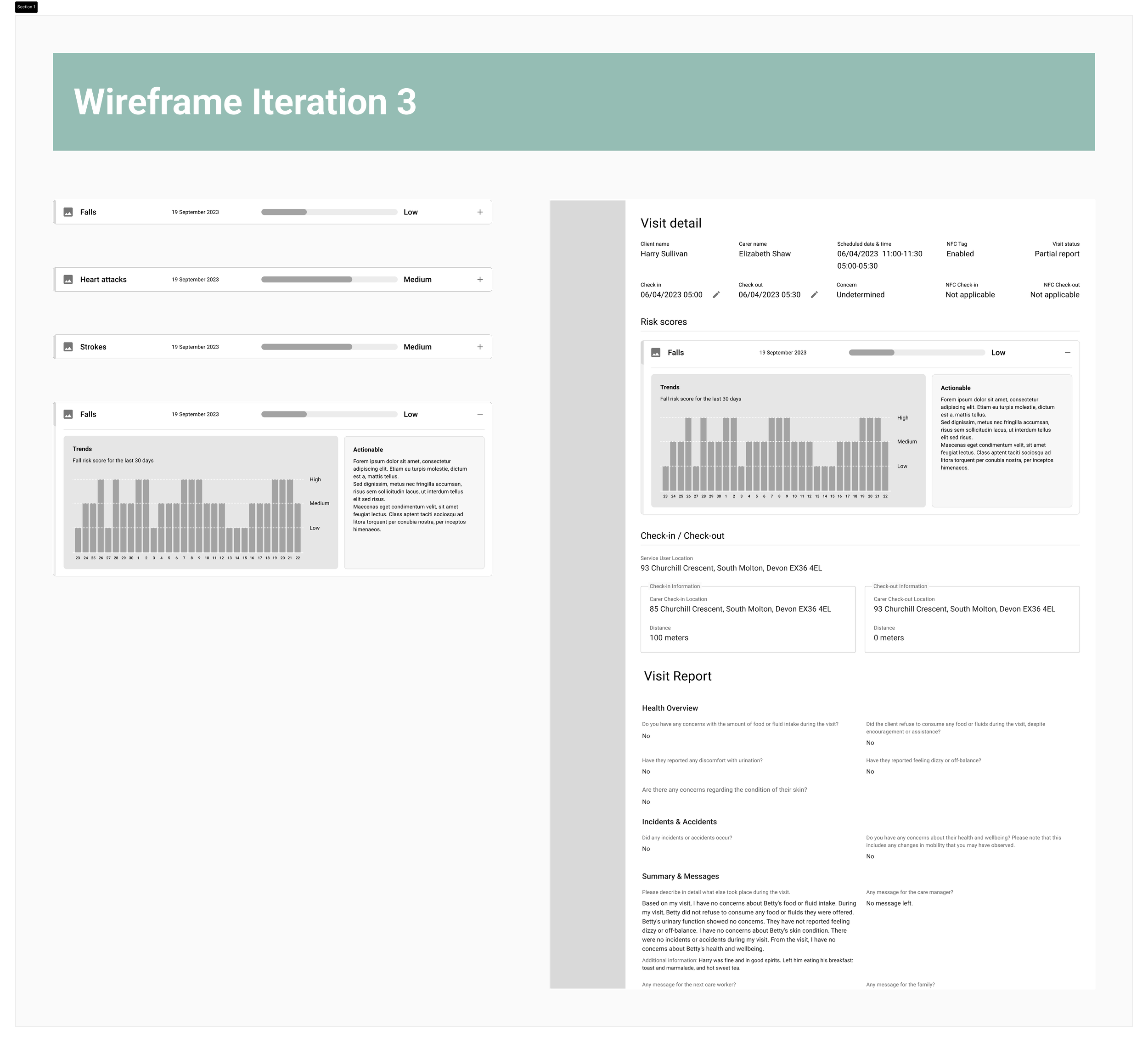
Throughout the project, designs were reviewed collaboratively with Product Managers, clinicians, engineers and the Data Science team to ensure the experience balanced usability with clinical accuracy.
Testing focused on questions such as:
Could users immediately understand the different risk levels?
Did the interface explain enough without becoming overwhelming?
Would carers know what action to take after viewing a risk alert?
Did the additional visit report question fit naturally into existing workflows?
Feedback helped refine the hierarchy, simplify supporting information and ensure the feature felt like an extension of existing care processes rather than a separate AI product.
Testing
The completed feature provided branch teams with a clear overview of people at increased risk of falling, allowing them to prioritise interventions before incidents occurred.
Key improvements included:
AI-powered falls risk prediction up to seven days in advance.
Simple traffic-light risk indicators.
Clear explanations supporting each prediction.
New falls-related question within the visit report to improve future predictions.
Flexible design that could support future predictive health features beyond falls.
Rather than replacing professional judgement, the feature supported better decision making by giving carers earlier visibility of changing risk.
Final Product
The Falls Risk feature helped shift Cera from reactive care towards preventative care.
Following rollout:
AI predictions identified increased falls risk up to 7 days earlier.
Prediction accuracy reached up to 97%.
Falls were reduced by approximately 20%.
Hospital admissions reduced by up to 70%.
Branch teams gained earlier visibility of vulnerable service users, enabling proactive interventions before incidents occurred.
The project demonstrated how thoughtful product design can make advanced AI understandable, trustworthy and genuinely useful in everyday clinical workflows.
Measuring Success
This project reinforced that designing AI isn't about exposing more data—it's about helping people make better decisions with confidence.
The biggest challenge wasn't visualising machine learning models. It was designing an experience that carers could immediately understand and trust while working in fast-paced environments.
I'm particularly proud of identifying the opportunity to improve the quality of incoming data through a simple addition to the visit report. By thinking beyond the interface itself, the product not only delivered better insights today but also created stronger predictions for the future.
Reflection